
Cooking rice using how to cook boiled rice in pressure cooker is a quick way to make tender, fluffy rice with little effort. For most white rice, use 1 cup of rice with 1 cup of water, cook at high pressure for 4 minutes, then let the pressure release naturally for 10 minutes.
This method works well in U.S. electric pressure cookers, such as Instant Pot-style models, and in many stovetop pressure cookers. Rice type, cooker design, altitude, and personal taste can affect the results, so use this basic method as a starting point.
What You Need
For about 3 cups of cooked white rice, gather:
- 1 cup long-grain white rice, jasmine rice, or basmati rice
- 1 cup water or low-sodium broth
- ½ teaspoon salt, optional
- 1 teaspoon butter or oil, optional
- A pressure cooker with a working sealing ring and pressure valve
- A fine-mesh strainer
- A fork or rice paddle
Use the cup that came with your pressure cooker only if you measure both the rice and liquid with that same cup. Many electric pressure cooker cups hold about 180 milliliters, while a standard U.S. measuring cup holds 240 milliliters. The ratio stays consistent when you use the same measure for both.

The Best Rice-to-Water Ratio
For most white rice, begin with an equal ratio:
| Rice type | Rice | Liquid | High-pressure cooking time | Release |
|---|---|---|---|---|
| Long-grain white rice | 1 cup | 1 cup | 4 minutes | 10-minute natural release |
| Jasmine rice | 1 cup | 1 cup | 4 minutes | 10-minute natural release |
| Basmati rice | 1 cup | 1 cup | 4 minutes | 10-minute natural release |
| Brown rice | 1 cup | 1¼ cups | 22–24 minutes | 10-minute natural release |
| Wild rice | 1 cup | 1½ cups | 25–30 minutes | Natural release |
These times are starting points, not universal rules. Some cookers use different pressure levels, and some rice brands absorb water differently.
For plain white rice, avoid adding a large amount of extra water. Unlike a pot on the stove, a sealed pressure cooker loses very little water during cooking. Too much liquid often produces soft or sticky rice.
Should You Rinse Rice?
Rinsing rice removes loose starch from the surface. This can help reduce stickiness, especially with basmati and long-grain white rice.
Place the rice in a fine-mesh strainer and rinse under cool water until the water looks less cloudy. Drain it well. Extra water clinging to wet rice can slightly change the final texture, but the difference is usually small for home cooking.
How to Cook White Rice in an Electric Pressure Cooker
Follow these steps for long-grain white rice, jasmine rice, or basmati rice.
1. Rinse and drain the rice
Measure 1 cup of rice. Rinse it under cool water, then let it drain for about 1 minute.
You do not need to rinse rice if the package says it is enriched or fortified and gives different preparation instructions. Rinsing can remove a small amount of surface nutrients from some enriched rice products.
2. Add rice and liquid
place the drained rice in the inner pot. Add:
- 1 cup water
- ½ teaspoon salt, if desired
- 1 teaspoon oil or butter, if desired
Stir once so the grains are evenly covered. Avoid stirring repeatedly, since extra agitation can release more starch.
3. Check the cooker
Make sure the inner pot is seated correctly. Check that the sealing ring is clean and properly fitted. Set the steam release valve to Sealing if your cooker has a separate valve.
Do not fill the cooker above the maximum line. Rice expands as it cooks and can create foam or block the steam release path.
4. Set high pressure
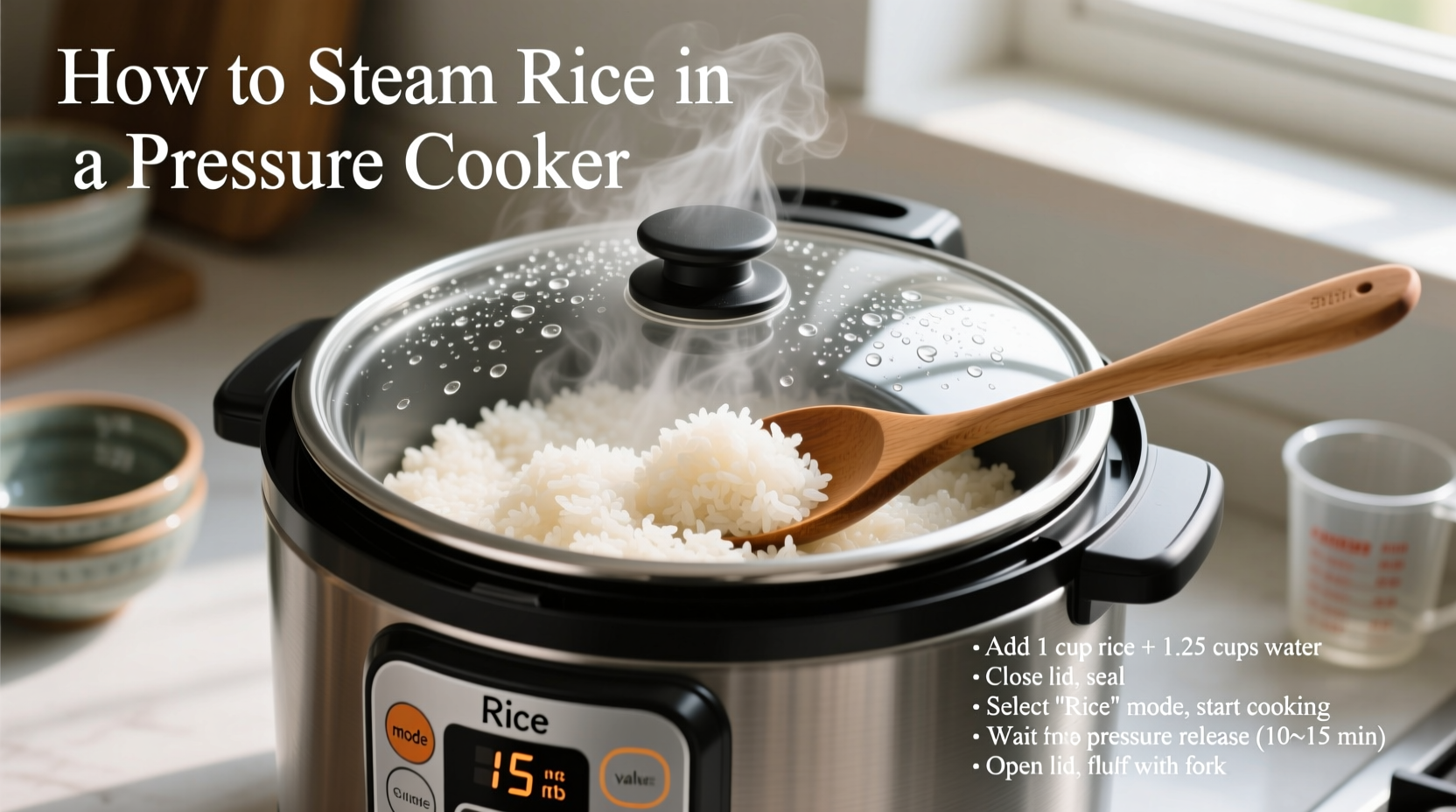
Select Pressure Cook, Manual, or the equivalent setting. Choose High Pressure and set the time to 4 minutes.
The cooker will take several minutes to build pressure. This warm-up time is separate from the 4-minute cooking time.
5. Let the pressure release naturally
When the cooking time ends, leave the cooker alone for 10 minutes. This is called a natural pressure release.
After 10 minutes, carefully move the valve to Venting if needed. Keep your hands and face away from the steam. When the pressure pin drops, open the lid.
6. Rest and fluff the rice
Let the rice sit uncovered for 5 minutes. Fluff it gently with a fork or rice paddle.
Fluffing separates the grains and lets extra steam escape. Avoid vigorous stirring, which can turn tender rice into a sticky mass.

How to Cook Rice in a Stovetop Pressure Cooker
A stovetop pressure cooker uses a different control method, but the basic rice ratio is similar.
- Rinse and drain 1 cup of rice.
- Add the rice, 1 cup of water, and optional salt or oil to the cooker.
- Lock the lid and set the pressure valve according to the manufacturer’s instructions.
- Heat the cooker until it reaches high pressure.
- Lower the heat enough to maintain pressure.
- Cook white rice for about 3 minutes at high pressure.
- Turn off the heat and allow a natural release for 10 minutes.
- Release any remaining pressure carefully.
- Open the lid, rest the rice for 5 minutes, and fluff it.
Stovetop cookers can vary more than electric models. If your cooker manual gives a rice setting or time, follow that guidance first. Never open a pressurized cooker by force.

How to Adjust the Method for Different Rice Types
Rice grains differ in size, starch, and water absorption. Use the chart below as a practical starting point.
Basmati rice
Basmati rice cooks into long, separate grains. Rinse it well, and consider soaking it for 15 to 20 minutes if you want longer grains.
Use 1 cup rice and 1 cup water. Cook at high pressure for 4 minutes, then allow a 10-minute natural release.
Jasmine rice
Jasmine rice is naturally soft and fragrant. It can become sticky if you add too much water or stir it too much.
Use 1 cup rice and 1 cup water. Cook at high pressure for 4 minutes, followed by a 10-minute natural release.
Brown rice
Brown rice has an outer bran layer, so it needs more water and more time than white rice.
Use 1 cup brown rice with 1¼ cups water. Cook at high pressure for 22 to 24 minutes, then allow a natural release for 10 minutes. The result should be chewy and tender, not mushy.
Short-grain and sushi rice
Short-grain rice releases more starch and is meant to be sticky. Rinse it until the water is less cloudy, but do not expect separate grains like basmati.
Use the package directions when available. A common starting point is 1 cup rice with 1 cup water, cooked for 5 minutes at high pressure with a 10-minute natural release.
Wild rice
Wild rice is not technically the same as common white or brown rice. It has a firm outer coating and needs more water and a longer cooking time.
Use about 1½ cups liquid for each cup of wild rice. Check the rice package and pressure cooker manual for the best timing.

How Much Cooked Rice Does 1 Cup Make?
One cup of dry white rice usually makes about 3 cups of cooked rice, although the exact amount depends on the rice variety and how much water it absorbs.
A simple planning guide is:
| Dry rice | Approximate cooked rice |
|---|---|
| ½ cup | 1½ cups |
| 1 cup | 3 cups |
| 2 cups | 6 cups |
| 3 cups | 9 cups |
Use a larger cooker for bigger batches. Rice expands and foams, so follow the cooker’s maximum fill line. If the manual gives a specific limit for grains, use the stricter limit.

How to Fix Rice That Did Not Cook Properly
Small changes can solve most rice problems. First check the rice type, liquid amount, pressure setting, and release method.
The rice is hard or undercooked
Possible causes include:
- Too little liquid
- The cooker did not reach pressure
- The lid or sealing ring leaked steam
- The rice was not given enough cooking time
- A large batch needed more time
Add 2 to 4 tablespoons of water. Close the lid and cook at high pressure for 1 to 2 more minutes. Allow a natural release.
If the cooker never reached pressure, inspect the sealing ring and steam valve after the cooker has cooled and depressurized.
The rice is mushy
Mushy rice usually means too much liquid or too much cooking time. It may also result from stirring the rice while it cooks.
For the next batch, reduce the liquid by 1 to 2 tablespoons per cup of rice. Drain the rice well after rinsing, and fluff it gently after cooking.
You can spread overcooked rice on a tray to cool. It may still work well in fried rice, rice patties, soup, or rice pudding.
The rice is sticky
Some rice is meant to be sticky, especially short-grain rice. For separate grains:
- Rinse the rice more thoroughly.
- Drain it well.
- Use the correct amount of water.
- Avoid stirring during cooking.
- Fluff with a fork after a short resting period.
- Try basmati or long-grain rice.
Sticky rice is not always a cooking failure. Rice variety controls texture as much as cooking technique.
The rice burns on the bottom
Burning may occur when there is too little liquid, food residue is stuck to the inner pot, or the cooker overheats before reaching pressure.
Turn off the cooker if you smell burning. Do not scrape the bottom while the pot is hot or pressurized. After it cools, inspect the inner pot and clean the cooker according to the manual.
For a fresh batch, rinse the inner pot, use the recommended liquid amount, and make sure no rice or starch is stuck beneath the pot.
Pressure Cooker Rice Safety
Pressure cooking is safe when the cooker is used as directed, but steam and hot rice can cause burns.
- Read the pressure cooker manual before using it.
- Do not force the lid open.
- Keep your face and hands away from the steam valve.
- Do not block the steam release.
- Keep rice below the cooker’s grain or maximum fill limit.
- Clean the sealing ring, lid, and steam valve as directed.
- Use a natural release when the manual recommends it for grains or foamy foods.
- Do not leave a pressure cooker unattended if the manufacturer says not to do so.
Cooked rice also needs safe storage. The U.S. Department of Agriculture advises refrigerating perishable leftovers promptly and using shallow containers to help food cool quickly. Store cooked rice in the refrigerator and use it within the time recommended by current USDA food-safety guidance. Reheat only the portion you plan to eat.

Can You Cook Rice Without a Rice Setting?
Yes. An electric pressure cooker does not need a dedicated rice button to cook rice.
Use the Manual or Pressure Cook function at high pressure. Set white rice for about 4 minutes, then use a 10-minute natural release.
The preset Rice button on some cookers may use low pressure or a sensor-based program. It may not produce the same result as a manual high-pressure setting. If you use the preset, follow your cooker’s instructions and adjust after testing a small batch.
Can You Double the Recipe?
Yes, you can usually double the rice and water while keeping the same cooking time.
For example:
- 2 cups white rice
- 2 cups water
- 4 minutes at high pressure
- 10-minute natural release
The cooker may take longer to reach pressure because there is more food inside. Do not exceed the grain or maximum fill line. For very large batches, cook in smaller batches for more even results.
Can You Add Seasonings or Broth?
Yes. Replace water with an equal amount of low-sodium broth for more flavor. You can also add salt, a small amount of oil, garlic powder, or whole spices.
Avoid thick sauces, dairy, or sugary liquids unless the recipe is designed for pressure cooking. Thick mixtures can scorch or interfere with pressure buildup. Add fresh herbs, lemon juice, or chopped vegetables after cooking when possible.
How Do You Store Leftover Pressure Cooker Rice?
Move leftover rice to a shallow container and refrigerate it promptly. Keep the container loosely covered while the rice cools, then seal it once chilled.
Reheat rice until it is hot throughout. Add a spoonful of water before reheating in a microwave or covered pan to restore moisture. Discard rice that has been left at room temperature for too long or smells, looks, or feels unusual.
Frequently Asked Questions
Is pressure cooker rice better than stovetop rice?
Neither method is always better. A pressure cooker can make rice with less active attention and little evaporation. Stovetop cooking gives you more direct control while the rice cooks. The best method depends on your cooker, rice type, and preferred texture.
Do you need to soak rice before pressure cooking?
No. Soaking is optional for most white rice. It can help basmati rice become longer and more tender, but soaked rice may need slightly less water and time. Drain it well before cooking.
Why does rice foam in a pressure cooker?
Rice contains starch that can foam when heated. Foam is more likely when the cooker is overfilled, the rice is not rinsed, or the rice is stirred too much. Rinse the rice, stay below the fill line, and follow the manual’s grain limit.
Should you use natural release or quick release for rice?
A 10-minute natural release usually gives rice time to finish absorbing liquid and helps reduce splattering. A quick release may leave rice wetter or less evenly cooked. Follow your cooker’s manual if it gives different instructions.
Can you cook frozen vegetables with rice?
You can add some frozen vegetables, but they release water and may change the texture. For fluffy rice, cook the rice first and stir in cooked vegetables afterward. If adding vegetables before cooking, reduce other liquid only with care and avoid filling the cooker too high.
Key Takeaways
- Use 1 cup rice and 1 cup water for most white rice.
- Cook at high pressure for 4 minutes in an electric pressure cooker.
- Allow a 10-minute natural pressure release.
- Rinse and drain rice for less surface starch.
- Use more water and time for brown rice.
- Stay below the cooker’s grain or maximum fill line.
- Fluff gently and let the rice rest for 5 minutes before serving.
Conclusion
For reliable pressure cooker rice, start with the right rice-to-water ratio, use high pressure, and allow a natural release. White rice needs little water because a sealed cooker traps steam. If the first batch is too firm or too soft, make a small adjustment rather than changing several things at once.
The easiest starting method is 1 cup rinsed white rice, 1 cup water, 4 minutes at high pressure, and 10 minutes of natural release.