
Introduction
For most U.S. electric pressure cookers, how long to cook potatoes in pressure cooker depends on their size and how they are cut. Potatoes take 2 to 5 minutes at high pressure when cut into chunks. Small whole potatoes usually need 10 to 12 minutes, while medium whole potatoes often need 12 to 15 minutes.
These times apply after the cooker reaches pressure. The full cooking time also includes the time needed to heat the water, build pressure, and release pressure. That total may take 20 to 40 minutes.
The best time depends on the potato’s size, type, and purpose. Cubed potatoes for soup cook much faster than whole russets for baking. This guide gives clear times, simple steps, and fixes for potatoes that turn out too firm or too soft.

Quick Answer: Pressure Cooker Potato Times
Use this table as a starting point for high-pressure cooking with about 1 cup of water in a 6-quart electric pressure cooker.
| Potato preparation | Pressure-cook time | Pressure release | Best use |
|---|---|---|---|
| 1-inch potato cubes | 2–3 minutes | Quick release | Soups, stews, potato salad |
| 1½-inch potato chunks | 3–4 minutes | Quick release | Mashed potatoes, side dishes |
| Small whole potatoes | 10–12 minutes | Natural release for 5 minutes, then quick release | Side dishes |
| Medium whole potatoes | 12–15 minutes | Natural release for 5 minutes, then quick release | Meal prep, mashed potatoes |
| Large whole potatoes | 16–20 minutes | Natural release for 5–10 minutes | Baked-potato-style servings |
| Baby potatoes, halved | 4–6 minutes | Quick release | Roasted or seasoned potatoes |
| Frozen potato pieces | 4–6 minutes | Quick release | Soups and quick side dishes |
A potato is done when a fork or thin knife slides into the center with little resistance. If the center still feels hard, lock the lid again and cook for 1 to 2 more minutes at high pressure.
These times are estimates, not guarantees. Potato size matters more than potato name. A large Yukon Gold may take longer than a small russet.

What Changes the Cooking Time?
The main factors are potato size, shape, quantity, and the pressure cooker model.
Size and shape
Heat must travel from the outside of the potato to the center. Large, whole potatoes take longer because the center is farther from the hot surface.
Cut potatoes into similar-sized pieces. If one piece is twice the size of another, the small piece may become soft before the large piece is ready.
Potato type
Most common potatoes work well in a pressure cooker:
- Russet potatoes: High in starch. They become light and fluffy.
- Yukon Gold potatoes: Creamy and slightly buttery. They hold their shape fairly well.
- Red potatoes: Firm and waxy. They are useful for potato salad and soups.
- Baby potatoes: Cook well whole or halved.
- Sweet potatoes: Need similar times, but very large ones may need extra cooking.
The type affects texture more than it affects cooking time. A waxy potato may stay firm after a starchy potato of the same size feels soft.
Quantity
Adding more potatoes does not always require more time. If the pieces are the same size and have room for steam to move around them, the pressure-cook time can stay close to the same.
A very full pot takes longer to reach pressure. It may also cook less evenly. Never fill the pressure cooker above its marked maximum line. For foods that expand or foam, follow the limit in your manual.
Pressure level
Use high pressure for most potato recipes. Low pressure may work, but it often needs a longer cooking time.
Electric pressure cookers, such as Instant Pot models, begin counting down only after they reach pressure. The display may show “On” while the cooker heats. This is normal.

How to Cook Potatoes in a Pressure Cooker
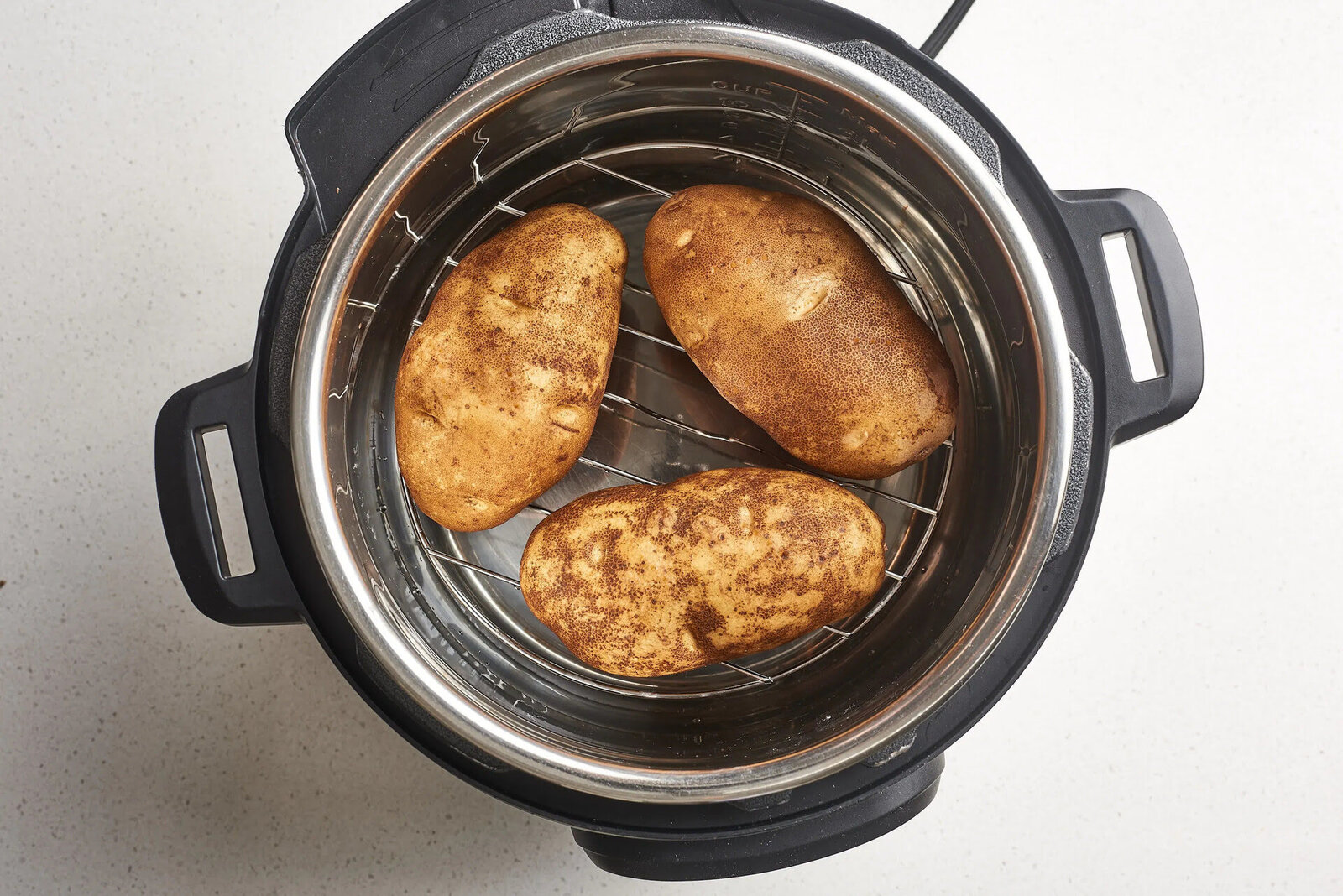
You need potatoes, water, a pressure cooker, and a trivet or steamer basket. A trivet helps keep potatoes above the water and reduces the chance of sticking.
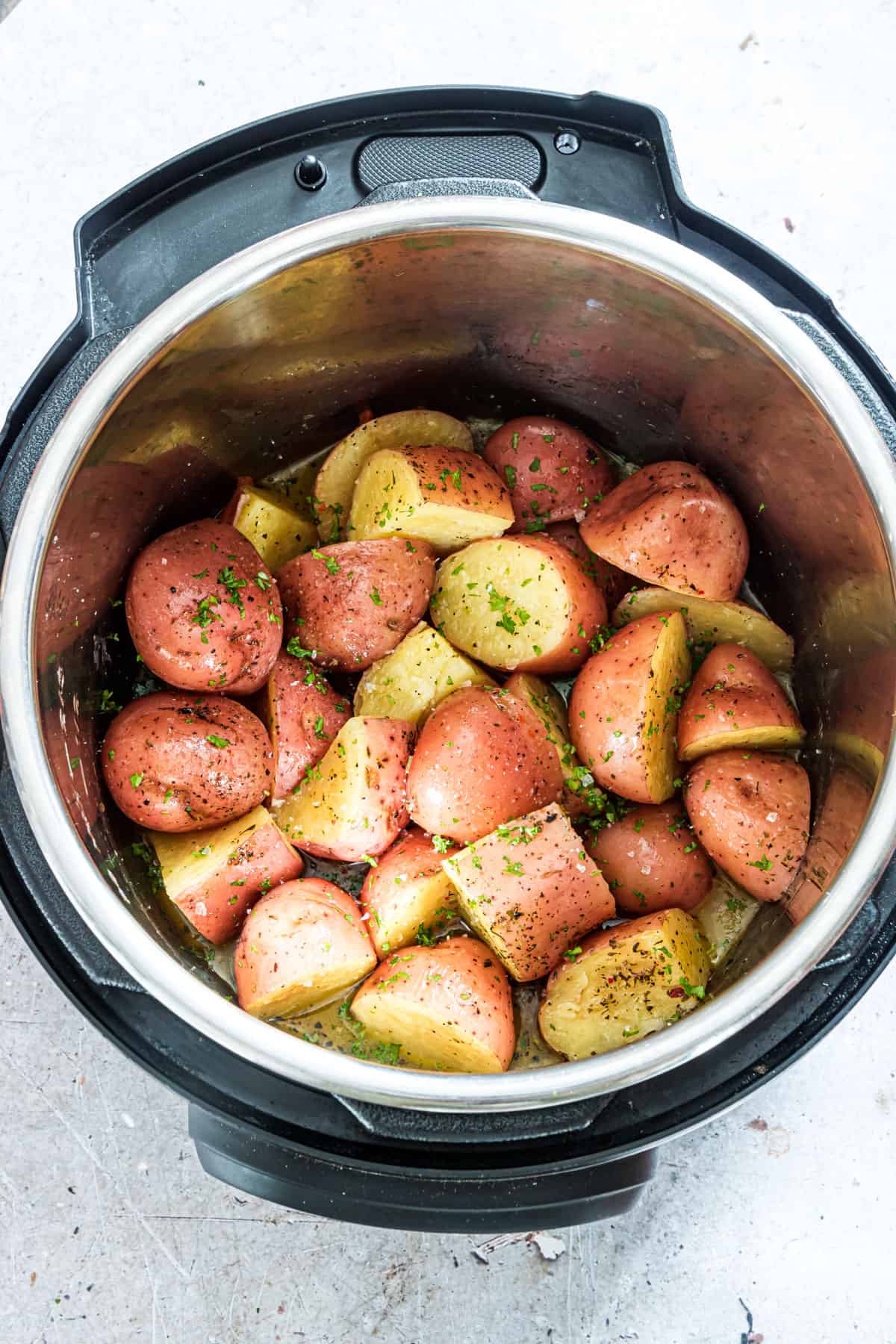
For potato chunks
- Wash and peel the potatoes if you want.
- Cut them into 1- to 1½-inch pieces.
- Add 1 cup of water to a 6-quart electric pressure cooker. Use the minimum amount required by your model.
- Place a trivet or steamer basket inside.
- Add the potatoes.
- Close and lock the lid.
- Set the valve to Sealing if your cooker has a separate valve.
- Cook at high pressure for 2 to 4 minutes.
- Use a quick release when the timer ends.
- Test one piece before draining or mashing.
For mashed potatoes, use 3- to 4-inch chunks if you want soft pieces. Drain them well before mashing. Extra water can make mashed potatoes loose and bland.
For whole potatoes
- Scrub the potatoes under cool running water.
- Remove dirt and trim damaged spots.
- Add 1 cup of water to the inner pot.
- Set the potatoes on a trivet.
- Cook at high pressure:
- 10 to 12 minutes for small potatoes
- 12 to 15 minutes for medium potatoes
- 16 to 20 minutes for large potatoes
- Let the pressure release naturally for 5 minutes.
- Carefully release the remaining pressure.
- Check the center with a fork.
Do not pierce potatoes as a substitute for pressure-cooker instructions. A fork test is useful after cooking, but piercing does not remove the need for water or proper pressure settings.
For potato salad
Use small, even pieces. Cook 1-inch cubes for about 2 minutes at high pressure, then release the pressure at once. Rinse or spread the potatoes on a tray to stop carryover cooking.
Potatoes continue to soften while they are hot. Chilling them quickly helps them keep their shape.

Natural Release or Quick Release?
Use a quick release for small potato pieces and a short natural release for whole potatoes.
A quick release stops cooking sooner. It works well for cubes because they can turn mushy after only a minute or two of extra heat.
A natural release lets pressure fall on its own. It is gentler and can help large potatoes finish cooking. However, a long natural release may make small pieces too soft.
Best release method by recipe
- Potato salad: Quick release
- Soup with potato cubes: Quick release, unless the recipe says otherwise
- Mashed potatoes: Quick or short natural release
- Whole potatoes: Natural release for 5 to 10 minutes, then quick release
- Very large potatoes: Natural release for 10 minutes can help, but test before serving
Keep your face, hands, and arms away from the steam stream. Use the release method stated in your pressure cooker manual if it differs from general guidance.
How Much Water Do You Need?
Most electric pressure cookers need at least 1 cup of thin liquid to create steam. Some smaller models require less, so check the manual for your exact cooker.
Water, broth, and a thin soup base can work. Thick sauces, cheese, cream, and tomato paste may scorch or prevent the cooker from reaching pressure if used alone.
For steamed potatoes, add the liquid to the pot and keep the potatoes on a trivet. For boiled potatoes, place the potatoes in the liquid if the recipe calls for it.
Do not use oil as the only cooking liquid. Oil does not create the steam needed to build pressure.
If you cook potatoes with meat, beans, or a thick sauce, follow the recipe’s liquid and fill limits. The food may need a different pressure time because each ingredient cooks at a different rate.

Pressure Cooker Potato Time Chart by Use
The best time depends on what you plan to do with the potatoes after cooking.
| Intended result | Potato size | Time at high pressure | Notes |
|---|---|---|---|
| Firm potato salad | ¾- to 1-inch cubes | 1–2 minutes | Quick release right away |
| Tender potato salad | 1-inch cubes | 2–3 minutes | Cool soon after cooking |
| Soup or stew | 1- to 1½-inch chunks | 3–5 minutes | Cooking in liquid may soften them more |
| Mashed potatoes | 1½-inch chunks | 4–6 minutes | Drain well before mashing |
| Whole baby potatoes | Small, 1–2 inches | 10–12 minutes | Use a trivet |
| Whole medium potatoes | About 2½–3 inches | 12–15 minutes | Add 1–2 minutes if very dense |
| Large whole potatoes | About 3½–4 inches | 16–20 minutes | Test the thickest potato |
| Sweet potatoes | Medium whole | 15–20 minutes | Skin may loosen after cooking |
The table assumes potatoes are not frozen and are placed in a cooker that reaches full pressure. If you cook at high altitude or use a stovetop model, your result may differ.

Signs That Potatoes Are Done
A done potato should feel soft in the center but not fall apart unless you want a mashable texture.
Check the thickest piece, not just the smallest one. Insert a fork or thin knife into the center. It should slide through without a hard spot.
Use these signs:
- Firm center: Cook for 1 to 2 more minutes.
- Soft outside and hard center: The pieces are too large or uneven.
- Falling-apart cubes: The cooking time or release time was too long.
- Dry, cracked whole potato: It may have cooked too long or had too little liquid.
- Waterlogged potatoes: They sat in too much water or were not drained soon enough.
If potatoes are undercooked, add at least the minimum liquid required by your cooker. Seal the lid and cook again for 1 to 2 minutes. If they are overcooked, use them for mashed potatoes, soup, potato cakes, or thickened chowder.
Common Mistakes to Avoid
Cutting uneven pieces
Uneven pieces cook at different speeds. Cut potatoes into matching sizes for more even results.
Counting the heating time as cooking time
The timer starts after the cooker reaches pressure. A recipe that says “cook for 4 minutes” usually means 4 minutes at pressure, not 4 minutes from the moment you press Start.
Using too little liquid
The cooker needs liquid to make steam. Follow the minimum liquid rule in your user manual.
Overcooking small cubes
Small cubes need only a few minutes. A long natural release can make them mushy even when the programmed time looks short.
Filling the pot too high
Leave room for steam and safe pressure release. Use the cooker’s maximum-fill marks and manual.
Opening the lid too soon
Never force the lid open. The lid should unlock only after pressure has fully dropped. If the cooker still resists, pressure remains inside.
Forgetting carryover cooking
Potatoes stay hot after cooking. Drain them promptly when you want firm pieces, especially for potato salad.

Stovetop Pressure Cooker vs. Electric Pressure Cooker
A stovetop pressure cooker may cook potatoes faster once it reaches pressure, but it requires closer attention to heat and pressure.
For an electric pressure cooker, use the programmed high-pressure setting and start timing when the display begins its countdown.
For a stovetop cooker:
- Add the required liquid.
- Bring the cooker to high pressure over medium-high heat.
- Lower the heat to maintain steady pressure.
- Start timing once high pressure is reached.
- Remove the cooker from heat when the time ends.
- Use the release method recommended by the manufacturer.
The same general potato times can serve as a starting point, but stovetop models vary. Always follow the manual for pressure levels, liquid amounts, and safe release.

Frequently Asked Questions
Can I cook potatoes without a trivet?
Yes. You can place potatoes directly in the water or cooking liquid. A trivet or steamer basket is better when you want potatoes that are less waterlogged or easier to remove.
Should I peel potatoes before pressure cooking?
No. Peeling is optional. Scrub the skin well, remove damaged areas, and peel after cooking if that is easier for your recipe.
Can I pressure cook potatoes and meat together?
Yes, but the ingredients must have compatible cooking times. Cut potatoes into larger pieces if the meat needs a long cook. Small pieces may break down before the meat is tender.
Why are my potatoes still hard after pressure cooking?
They may be too large, the cooker may not have reached full pressure, or the pressure may have released before the timer began. Cook them again for 1 to 2 minutes and test the thickest piece.
Can I cook frozen potatoes in a pressure cooker?
Yes, but frozen pieces usually need a few extra minutes. Separate large frozen clumps when possible. Check the center before serving.
How long do sweet potatoes take in a pressure cooker?
Medium whole sweet potatoes usually take 15 to 20 minutes at high pressure. Small cubes may take 3 to 5 minutes. Test the thickest piece because sweet potatoes vary widely in size.
Is pressure-cooked potato skin safe to eat?
Yes, if the potato is scrubbed and free of green areas or large sprouts. Cut away green or damaged parts. When in doubt, peel the potato.

Key Takeaways
- Cut potato chunks take about 2 to 5 minutes at high pressure.
- Small whole potatoes take about 10 to 12 minutes.
- Medium whole potatoes take about 12 to 15 minutes.
- Large whole potatoes take about 16 to 20 minutes.
- Use high pressure and enough thin liquid for your cooker.
- Quick-release small pieces to help prevent mushiness.
- Test the thickest potato with a fork before serving.
- Add 1 to 2 minutes if the center is still firm.
Conclusion
For most U.S. pressure cookers, start with 3 minutes for 1-inch potato cubes or 12 to 15 minutes for medium whole potatoes. Use high pressure, add the required liquid, and test the thickest piece after cooking.
Potatoes are forgiving. If they are a little firm, cook them again briefly. If they become too soft, turn them into mashed potatoes or soup. The most reliable method is to keep the pieces even, use the right release method, and adjust the time for size.
Pingback: How To Cook Chicken Breast In Pressure Cooker: Easy Guide - Smart Find Today
Pingback: How To Use Instant Pot Pressure Cooker: Easy Guide - Smart Find Today