
stainless steel cookware works well for home cooks across the United States, whether you use a gas, electric, or induction range. It can sear meat, sauté vegetables, boil pasta, make pan sauces, and cook acidic foods when you use the right heat and cleaning method.
The main rule is simple: preheat the pan, add oil, dry the food, and avoid moving it too soon. Stainless steel does not have a nonstick coating, so food may stick if the pan is cold, too hot, crowded, or not properly oiled. With a few small changes, stainless steel pans can become reliable everyday tools.
What Is Stainless Steel Cookware?
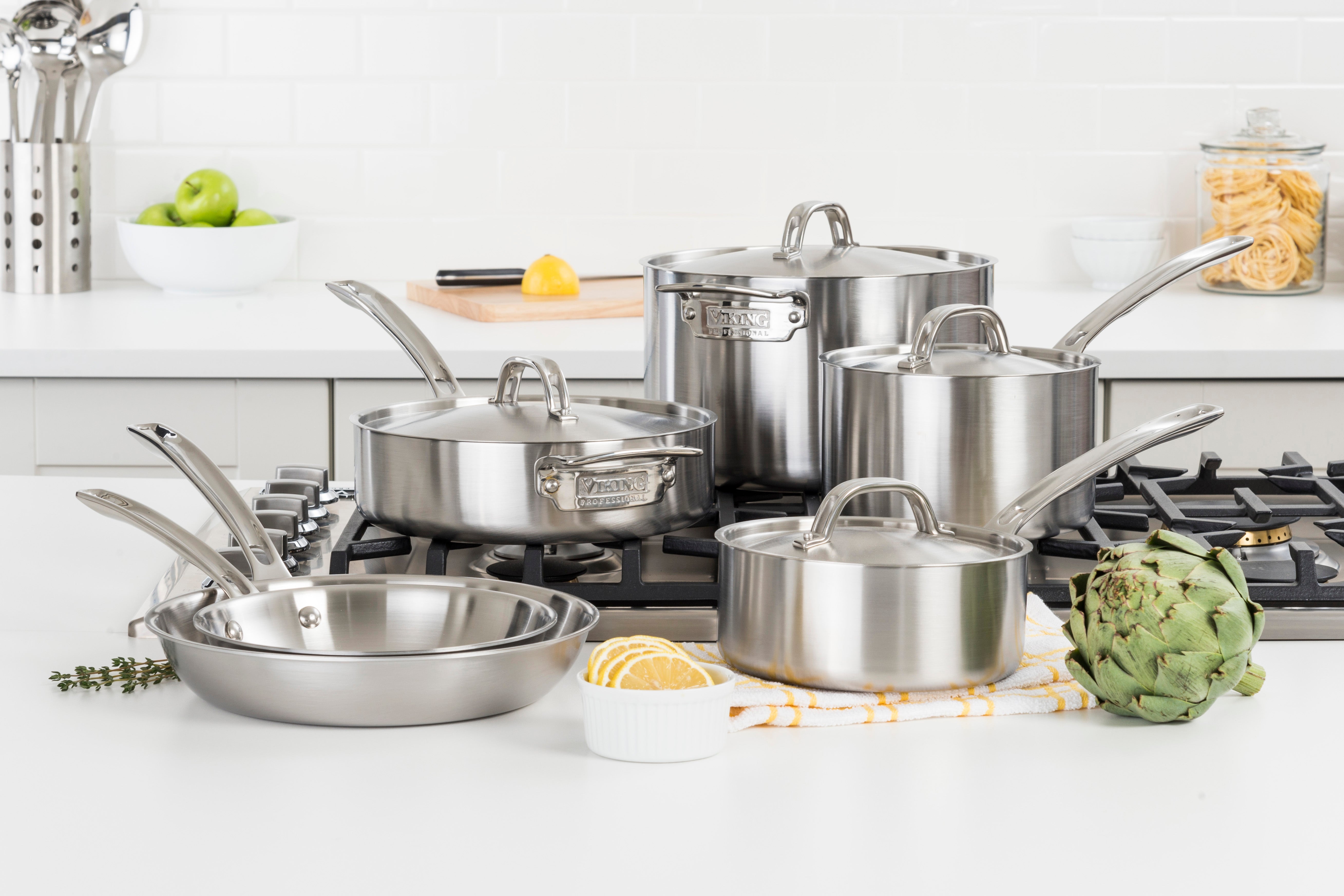
Stainless steel cookware is made from steel blended with metals such as chromium and, in many pans, nickel. Chromium helps the surface resist rust and corrosion. Nickel can improve shine, strength, and resistance to corrosion.
Many stainless steel pans use several layers:
- Stainless steel cooking surface: Provides a durable, nonreactive surface.
- Aluminum or copper core: Spreads heat more evenly than stainless steel alone.
- Magnetic stainless steel exterior: Allows some pans to work on induction cooktops.
- Clad construction: Bonds two or more metal layers together across the base or the full pan.
The cooking surface is not naturally nonstick. Instead, good results come from controlling heat, using enough fat, and allowing food to form a browned crust before turning it.
A stainless steel pan is often a good choice for:
- Searing steak, chicken, pork, and fish
- Browning ground meat
- Sautéing vegetables
- Making gravies and pan sauces
- Cooking tomato-based or wine-based dishes
- Boiling water and pasta
- Oven finishing, when the pan and handle are oven-safe
Always check the cookware maker’s instructions for oven temperature limits, dishwasher use, lid safety, and induction compatibility.

How to Use Stainless Steel Cookware Step by Step
Use this basic method for most stovetop cooking. Adjust the heat and oil amount based on the food and the pan size.
1. Choose the right burner and pan size
Match the pan to the burner. A burner that is much smaller than the pan may heat the center while leaving the edges cool. A burner that is much larger can overheat the sides and cause hot spots.
Use a pan that gives the food room to cook in one layer. Crowding traps steam and can prevent browning.
As a general guide:
- Use a small skillet for one or two eggs or a small amount of food.
- Use a medium skillet for vegetables, chicken breasts, or a small stir-fry.
- Use a large skillet for several servings or foods that need space to brown.
- Use a saucepan for liquids, grains, soups, and sauces.
2. Dry the food well
Pat meat, fish, tofu, and vegetables dry with paper towels or a clean kitchen towel. Surface moisture must evaporate before browning can begin.
Wet food may:
- Stick more strongly
- Steam instead of brown
- Cause oil to splatter
- Lower the pan temperature
This step matters most when you want a crisp crust.
3. Preheat the pan over medium heat
Place the empty pan on the burner and heat it over medium or medium-low heat. Stainless steel holds heat well, so it often needs less heat than you expect.
A simple water test can help:
- Flick a few drops of water into the pan.
- If the water sits still and slowly evaporates, the pan is not ready.
- If the water breaks into small balls that glide across the surface, the pan is usually hot enough for oil.
- If the water vanishes at once, the pan may be too hot.
Wipe out the water before adding oil. Do not use this test as a reason to heat the pan until it smokes.
4. Add oil after the pan is hot
Add a thin layer of cooking oil once the pan has preheated. Swirl the oil across the base.
Choose an oil that suits the heat and food. Common choices include:
- Canola oil
- Vegetable oil
- Avocado oil
- Peanut oil, if there are no allergy concerns
- Olive oil for moderate-heat cooking
If the oil begins to smoke heavily, remove the pan from the burner for a moment and lower the heat. Smoke means the oil is overheating, not that the pan is ready for food.
5. Add food in a single layer
Lower the food into the pan away from your body to reduce the risk of oil splatter. Leave space between pieces when browning.
The food may stick at first. This is common. As a browned crust develops, it often releases more easily.
Do not keep scraping or flipping the food. Give it time to brown.
6. Adjust the heat during cooking
Start at medium heat, then lower it if the food browns too quickly. Stainless steel cookware can become very hot and stay hot after you reduce the burner.
Use lower heat when:
- Cooking eggs
- Melting butter
- Simmering a sauce
- Heating delicate fish
- Cooking food for a long time
Use medium to medium-high heat for:
- Searing meat
- Browning vegetables
- Reducing a sauce
High heat is rarely needed for routine home cooking. Excessive heat can burn oil, scorch food, discolor the pan, and make sticking worse.
7. Deglaze the pan for a sauce
Brown bits left on the bottom are called fond. They contain concentrated flavor.
To make a quick pan sauce:
- Remove the cooked food.
- Lower the heat.
- Add a small amount of water, stock, wine, or another suitable liquid.
- Scrape the bottom with a wooden, silicone, or other non-damaging utensil.
- Simmer until the liquid reaches the texture you want.
- Finish with butter, herbs, or other ingredients if desired.
Do not add cold liquid to an extremely hot pan if it may cause violent bubbling or splashing. Let the pan cool slightly first.
How to Prevent Food From Sticking
Food sticks when proteins or starches bond to the pan before the surface has browned. Sticking does not always mean the pan is defective or damaged.
Use this checklist:
- Preheat the pan.
- Add enough oil to coat the cooking surface.
- Dry the food.
- Avoid overcrowding.
- Keep the heat moderate.
- Do not move the food too soon.
- Use a thin, flexible spatula when the food is ready to turn.
Eggs
Eggs are among the hardest foods to cook in stainless steel because their proteins bond easily to a hot surface.
For better results:
- Use low to medium-low heat.
- Preheat briefly rather than aggressively.
- Add butter or oil before the eggs.
- Let the fat coat the pan.
- Add the eggs when the fat is warm but not smoking.
- Stir gently with a silicone spatula.
A well-seasoned cast-iron pan or a quality nonstick pan may be easier for very delicate eggs. Stainless steel can cook eggs, but it requires more heat control.
Fish
Fish can stick because its surface is delicate and moist.
Pat the fish dry, use enough oil, and place it in the pan skin-side down when appropriate. Let the first side brown before trying to turn it. If the fish resists, wait another short time rather than forcing it.
Pancakes and other batter foods
Use moderate heat and a light coating of oil or butter. The first pancake can help you judge the pan temperature. If the outside browns before the center cooks, lower the heat.

How to Cook Common Foods in Stainless Steel
Steak
For a basic stovetop sear:
- Pat the steak dry.
- Season it shortly before cooking.
- Preheat the skillet over medium to medium-high heat.
- Add a high-heat cooking oil.
- Place the steak in the pan and do not move it right away.
- Turn it when the first side has developed a brown crust.
- Use a food thermometer to check doneness.
- Rest the steak before slicing.
The USDA recommends cooking whole cuts of beef, pork, lamb, and veal to at least 145°F, followed by a three-minute rest. Use a clean thermometer in the thickest part of the food. The final temperature can continue to rise after the pan is removed from the heat.
Chicken
Chicken breasts and thighs brown well in stainless steel. Dry the surface, use moderate heat, and avoid turning the chicken repeatedly.
The USDA recommends cooking poultry to 165°F. Check the thickest part with a food thermometer. A browned outside does not prove that chicken is safe to eat.
Ground meat
Break the meat into the pan after the oil is hot. Let it brown before stirring constantly. Stirring too much can release moisture and slow browning.
The USDA recommends cooking ground meats to 160°F. Drain excess fat carefully and avoid pouring grease down the sink.
Vegetables
Stainless steel works well for sautéed vegetables. Start with a thin layer of oil and add firm vegetables first. Add softer vegetables later so they do not become overcooked.
If vegetables begin to burn, lower the heat and add a small amount of water or stock. The liquid can loosen browned bits and create steam.
Tomato sauce and acidic foods
Stainless steel is generally suitable for tomato sauce, citrus-based dishes, wine sauces, and other acidic foods. However, avoid storing acidic food in the pan for long periods unless the cookware instructions allow it.
Long cooking in a new or lower-quality stainless steel pan may increase the release of small amounts of metals into food. Research has found that release can vary with acidity, cooking time, cookware condition, and the composition of the steel. People with a known nickel allergy should follow medical advice and consider cookware made with a material they tolerate.

How to Clean Stainless Steel Cookware
Clean the pan after it has cooled enough to handle safely. Do not place a very hot pan under cold water. A sudden temperature change can warp the pan or damage a bonded base.
For normal cleaning
- Remove leftover food.
- Add warm water and a small amount of dish soap.
- Let the pan soak if needed.
- Wash with a soft sponge or nonabrasive scrub pad.
- Rinse well.
- Dry promptly to reduce water spots.
Check the manufacturer’s instructions before putting the pan in a dishwasher. Some stainless steel cookware is dishwasher-safe, but repeated dishwasher use may cause discoloration, dullness, or damage to handles and other parts.
For stuck-on food
Fill the pan with enough water to cover the stuck area. Add a small amount of dish soap and simmer gently for several minutes. Turn off the heat, let the water cool, and loosen the food with a wooden or silicone utensil.
For stubborn residue, make a paste with baking soda and water. Rub gently, then rinse and dry.
For brown, blue, or rainbow discoloration
Heat discoloration is usually cosmetic. It can result from high heat, mineral deposits, or cooking residue.
Try one of these methods:
- Wash with warm water and dish soap.
- Wipe with diluted white vinegar for mineral film.
- Use a stainless steel cleaner according to its label.
- Use a small amount of a cookware-approved oxalic-acid cleaner for stubborn stains.
Rinse thoroughly after using any cleaner. Do not mix cleaning products.
What to avoid
Avoid the following unless the manufacturer specifically approves them:
- Chlorine bleach
- Oven cleaner
- Steel wool
- Harsh abrasive powders
- Metal knives used to scrape the surface
- Long storage of salty or acidic food in the pan
The U.S. Environmental Protection Agency advises never mixing bleach with acids or ammonia because dangerous gases can form. Keep household cleaners away from food preparation areas and follow the product label.

How to Use Stainless Steel Cookware on Different Stovetops
Gas ranges
Gas burners can heat the sides of a pan and create hot spots. Keep the flame under the base instead of allowing it to rise around the sides. Use a lower flame than you might expect because stainless steel retains heat.
Electric coil and smooth-top ranges
Electric burners respond more slowly than gas burners. Reduce the heat early because the burner and pan may stay hot after you turn the control down.
Lift the pan instead of sliding it across a glass cooktop. Sliding can scratch the surface or move food suddenly.
Induction cooktops
Induction works only with cookware that contains a magnetic material. Test a pan by placing a magnet against the outside bottom. If the magnet sticks firmly, the pan may work on induction.
The pan should also have a flat base that makes full contact with the cooktop. Follow the cookware and cooktop instructions because magnetic response alone does not confirm every performance detail.
Oven use
Many stainless steel pans can go into the oven, but the safe temperature depends on the handle, lid, coating, and design. A stainless steel body does not automatically mean the entire pan is oven-safe.
Before oven use, check:
- Maximum oven temperature
- Handle material
- Lid material
- Broiler instructions
- Whether the pan can move directly from oven to a cool surface
Use oven mitts. Stainless steel handles can become very hot even when they look cool.

Common Stainless Steel Cookware Mistakes
| Problem | Likely cause | Better approach |
|---|---|---|
| Food sticks badly | Cold pan, wet food, or early turning | Preheat, dry the food, add oil, and wait for browning |
| Oil smokes | Heat is too high | Remove the pan briefly and lower the burner |
| Food burns outside but stays raw inside | Pan is too hot or food is too thick | Start with medium heat and finish at a lower temperature |
| Pan has rainbow colors | Heat or mineral deposits | Clean with vinegar or a cookware-safe cleaner |
| White spots appear | Hard-water minerals | Use diluted vinegar, rinse, and dry |
| Pan warps | Thermal shock or uneven heating | Let the pan cool before washing and use a matched burner |
| Sauce scorches | Heat is too high or liquid is too low | Lower the heat and stir with a safe utensil |
| Food tastes metallic | Very long cooking or storage of acidic food | Use stainless steel for cooking, then transfer leftovers to a suitable container |
A pan that is slightly discolored may still work normally. Deep warping, a loose base, cracks, sharp edges, or a damaged handle are different. Stop using cookware with structural damage.

Stainless Steel vs. Other Cookware Materials
No cookware material is best for every task.
| Cookware type | Main strength | Main limitation |
|---|---|---|
| Stainless steel | Browning, sauces, durability, acidic foods | Food can stick without heat and oil control |
| Nonstick | Eggs, delicate fish, low-fat cooking | Coating can wear and may have temperature limits |
| Cast iron | Heat retention and searing | Heavy and reactive with some foods |
| Carbon steel | Fast searing and a developing seasoning layer | Needs seasoning and routine care |
| Enameled cast iron | Slow cooking and heat retention | Heavy and may chip if mishandled |
Choose stainless steel when you want a durable pan for browning and pan sauces. Choose nonstick when easy release matters most. Use cast iron or carbon steel when high heat and heat retention are priorities.
Many kitchens benefit from using more than one material rather than asking one pan to do every job.

Frequently Asked Questions
Do you need to season stainless steel cookware?
No. Stainless steel does not require seasoning in the same way that cast iron or carbon steel does. A thin film of oil can improve release during a specific cooking session, but it is not a permanent seasoning layer.
Why does food stick to my stainless steel pan?
The most common reasons are insufficient preheating, wet food, too little oil, excessive heat, overcrowding, or turning food too soon. Reduce the problem by drying the food, using moderate heat, and waiting for a browned crust to form.
Can you use metal utensils with stainless steel cookware?
Many uncoated stainless steel pans can tolerate metal utensils. However, sharp edges can scratch the surface, and metal tools may damage nonstick coatings or decorative finishes. Wooden, silicone, or smooth-edged metal utensils are safer choices when the manufacturer’s instructions are unclear.
Is stainless steel cookware safe for acidic foods?
Stainless steel is commonly used for acidic foods such as tomatoes, citrus, and vinegar-based sauces. Avoid storing acidic or salty food in the pan for long periods, and follow the cookware maker’s guidance. People with a known nickel sensitivity should ask a health professional about suitable cookware materials.
Can stainless steel cookware go in the dishwasher?
Some stainless steel cookware is dishwasher-safe, but the answer depends on the full design. Check the care instructions for the pan, lid, handle, and any bonded or coated parts. Hand washing often helps preserve the finish.

Key Takeaways
- Preheat stainless steel over medium heat.
- Dry food before adding it to the pan.
- Add oil after preheating and before adding food.
- Leave food alone until it has browned and releases more easily.
- Lower the heat sooner than you think because stainless steel retains heat.
- Clean with mild soap, warm water, and nonabrasive tools.
- Avoid thermal shock, bleach, harsh abrasives, and long-term food storage in the pan.
- Use a food thermometer for meat and poultry rather than judging safety by color.
Conclusion
The best way to use stainless steel cookware is to control the heat and give the food time to cook. Preheat the pan, add a thin layer of oil, keep food dry, and avoid moving it before it browns.
Start with a simple meal such as sautéed vegetables or chicken. Once you learn how your burner and pan respond, you can move on to searing, deglazing, and making pan sauces. If sticking continues, change one factor at a time: heat, oil, food moisture, pan size, or cooking space. That steady approach turns stainless steel from a frustrating surface into a dependable part of your kitchen.
Pingback: Remove Rust From Cast Iron Cookware in 2026, Easy Guide