
Introduction
If you cook in a U.S. kitchen, copper pots and pans can bring fast, even heat to a gas, electric, or induction setup. They can also show dark spots, fingerprints, grease, and tarnish after only a few uses. That does not mean the pan is ruined.
The safest way to learn how to clean copper cookware depends on two things: the copper finish on the outside and the lining inside. Use mild soap for daily cleaning, a gentle copper polish for exterior tarnish, and extra care with tin or stainless-steel interiors. Never use harsh abrasives on a lined cooking surface.
First, Identify Your Copper Pan
Before cleaning copper cookware, check which parts are made of copper and which parts are lined. This small step prevents many common mistakes.
Most copper cookware has one of these interiors:
- Stainless steel: Durable and less likely to react with acidic foods.
- Tin: Traditional, smooth, and gentle, but softer than stainless steel.
- Bare copper: Uncommon for general cooking and not suitable for many acidic foods.
- Nonstick coating: Needs the same care as other nonstick cookware. Avoid abrasive cleaners and metal tools.
Look at the pan before you scrub it. A bright silver interior is often stainless steel. A pale gray or slightly dull interior may be tin. If you are unsure, check the maker’s care guide or the stamp on the bottom.
The U.S. Food and Drug Administration Food Code limits the use of copper and copper alloys with acidic foods. Acidic foods include tomatoes, vinegar, citrus juice, and wine. This rule matters most when food can touch bare copper.
What the outside finish tells you
Copper cookware may have a polished, brushed, or lacquered exterior.
- Uncoated copper will darken and tarnish over time. It can be polished.
- Lacquered copper has a clear protective coating. It usually needs only soap and water.
- Brushed copper may lose its texture if you polish it too hard.
- Hammered copper can hold grease in its small dents. Use a soft brush or cloth.
Do not polish a lacquered pan unless the maker says it is safe. Polish can remove the coating and leave uneven patches.

What You Need to Clean Copper Cookware
Gather the mildest tools that can do the job. Strong chemicals and rough pads often cause more harm than good.
For routine washing
- Warm water
- Mild dish soap
- Soft sponge or microfiber cloth
- Soft nylon brush for seams and rivets
- Clean towel
For exterior tarnish
Choose one method:
- A copper cleaner made for cookware
- A paste of lemon juice and table salt
- White vinegar and table salt
- A mild paste of baking soda and water for light marks
A commercial copper cleaner may work faster, but follow its label. Some products contain acids or abrasives that are meant for decorative copper rather than cookware.
Avoid these materials
Do not use the following on copper cookware unless the manufacturer gives clear instructions:
- Steel wool
- Metal scouring pads
- Abrasive powder cleaners
- Oven cleaner
- Chlorine bleach
- Ammonia-based cleaners
- Strong drain or bathroom cleaners
- Automatic dishwasher detergent
- Coarse sandpaper
These products can scratch copper, strip lacquer, damage tin, or leave residues.

How to Clean Copper Cookware Step by Step
The best cleaning method starts with ordinary washing. Add polish only when tarnish remains.
1. Let the pan cool
Allow the pan to cool before you wash it. Pouring cold water into a hot copper pan can cause thermal shock. Sudden temperature changes may warp the pan or stress its lining.
Do not leave food stuck in the pan for days. Once the pan is cool enough to handle, begin cleaning.
2. Remove loose food
Rinse the pan with warm water. If food is stuck, fill the pan with warm water and a small amount of dish soap. Let it soak for 15 to 30 minutes.
For stubborn food, place the pan on the stove and warm the soapy water gently. Do not boil the water. Let the pan cool again before you scrub it.
Use a wooden, silicone, or plastic utensil to lift stuck food. Never scrape a tin lining with a knife.
3. Wash the cooking surface
Apply mild dish soap with a soft sponge. Clean the base, sides, rim, handle, and rivets.
If the pan has a tin lining, use a light touch. Tin is softer than stainless steel and can wear through when scrubbed with rough tools. If the lining looks thin, cracked, or patchy, stop using the pan until it is inspected or relined.
4. Clean the copper exterior
For light grease or fresh marks, wash the outside with warm, soapy water. Dry it right away with a soft towel.
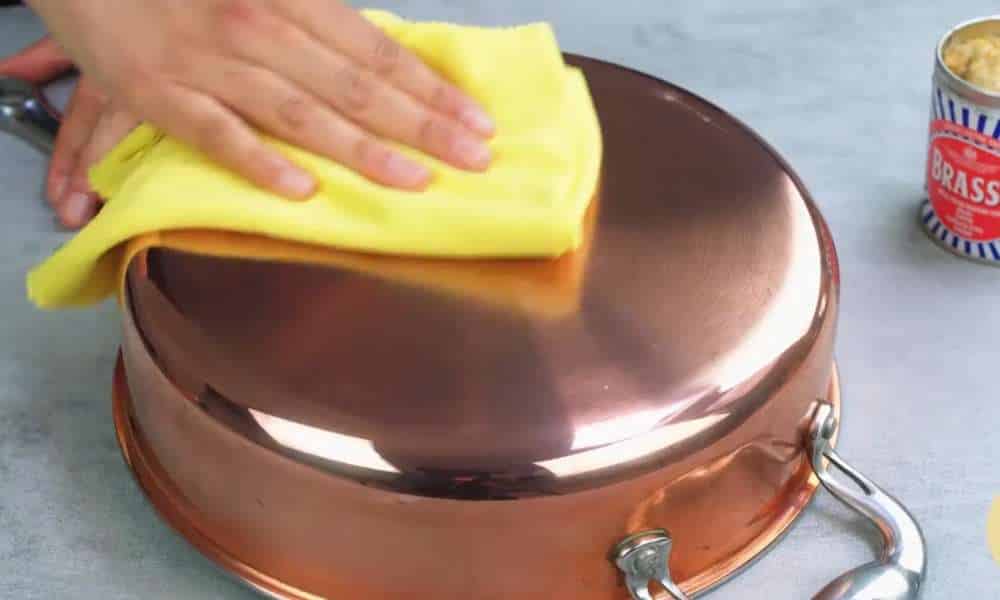
For tarnish on uncoated copper, apply a small amount of copper cleaner to a cloth. Rub in gentle, even strokes. Follow the product directions, then rinse the outside well and dry it.
You can also use a simple home paste:
- Mix lemon juice with a small amount of table salt.
- Put the paste on a soft cloth.
- Rub the copper lightly.
- Rinse the exterior well.
- Dry and buff with a clean cloth.
Keep acidic cleaning pastes away from the pan’s interior. Do not let them sit on tin, stainless steel, or nonstick surfaces.
5. Rinse away all cleaner
Rinse the pan with clean water. Cleaner left in seams, around rivets, or near the rim can leave a dull film.
If you used a commercial copper polish, read the label before washing. Some formulas are designed for decorative metal and may require extra rinsing before the pan returns to food use.
6. Dry the pan completely
Dry copper cookware at once. Water spots can leave marks, and moisture trapped under a rim or handle can encourage corrosion.
Store the pan only after it is fully dry. If pans must be stacked, place a soft cloth between them.
How to tell if you succeeded
A clean pan should have:
- No greasy film
- No loose food
- No cleaner residue
- A dry surface
- An intact lining
- A copper exterior that looks even, whether polished or naturally darkened
Perfect shine is optional. A darkened copper surface is usually a cosmetic change, not a cleaning failure.

How to Remove Tarnish From Copper
Tarnish is a surface reaction between copper and air, moisture, skin oils, or food residue. It often appears as brown, gray, or black areas. Green or blue deposits are a stronger warning sign, especially on a cooking surface.
For uncoated copper, use a copper polish or a mild acidic paste. Work in small areas and use light pressure. Rinse well after polishing.
A lemon-and-salt paste can remove light tarnish because the acid helps dissolve copper oxides while the salt provides mild physical action. It is not risk-free. Salt can scratch if rubbed hard, and acid can affect other metals or coatings.
Avoid trying to polish every mark from a hammered or brushed pan. Heavy rubbing can flatten the texture or create bright spots. Clean the surface evenly instead of chasing one small stain.
Should you use ketchup on copper?
Ketchup contains acid, so it may loosen light tarnish. However, it also contains sugar, salt, and food solids. It can leave a sticky residue in seams and around handles.
A purpose-made copper cleaner or a controlled lemon-and-salt paste is easier to rinse and measure. If you use any acidic cleaner, keep it on the copper exterior only and rinse the pan well.
What about baking soda?
Baking soda is a mild abrasive and can help with light marks or food residue. It is not always the best choice for a bright copper finish because rubbing can leave a cloudy area.
Use baking soda mainly for gentle spot cleaning. Do not use it as a heavy scrub on tin, lacquer, or nonstick surfaces.

How to Clean the Inside of a Copper Pan
The interior needs a different method from the copper outside.
Stainless-steel lining
Wash stainless-steel interiors with warm water, mild dish soap, and a soft sponge. For stuck food, soak the pan first.
A soft paste of baking soda and water may help with a small burned spot. Apply it briefly, rub gently, and rinse. Avoid harsh scouring pads if you want to preserve the finish.
Tin lining
Wash tin-lined cookware by hand with mild soap. Do not use steel wool, scouring powder, or aggressive scrubbing.
Tin can soften or wear over time. Signs of a damaged tin lining include:
- Exposed copper spots
- Deep scratches
- Peeling or flaking
- A rough or uneven area
- A silver-gray lining that has worn thin
If bare copper shows through, do not cook acidic foods in the pan. Consider having the pan assessed by a professional cookware repair service that offers retinning.
Bare copper interior
Do not assume bare copper is safe for every recipe. Acidic foods can react with exposed copper. The FDA Food Code places limits on copper contact with acidic foods, so use the pan only within the maker’s instructions.
If the interior has a green, blue, or powdery coating, stop using it for food. Clean it only if the manufacturer provides a suitable method, or ask a qualified cookware repair professional for help.

How to Clean Burned or Stuck Food
Start with soaking. Most stuck food needs time, not force.
- Fill the pan with warm water.
- Add a little mild dish soap.
- Let it soak for 15 to 30 minutes.
- Loosen the food with a wooden or silicone utensil.
- Wash with a soft sponge.
- Rinse and dry.
If food remains, repeat the soak. For stainless steel only, you may simmer plain water for a short time to soften the residue. Do not heat an empty copper pan, and do not simmer cleaners unless the manufacturer specifically allows it.
Do not use a knife or metal spatula to chip away burned food. A scratch in a lining can become a place for food to collect and may expose copper beneath tin or another coating.
If the copper outside has a black, baked-on stain, do not assume it will return to a mirror finish. Excessive heat can permanently change the surface or damage lacquer. Clean what you can without grinding away the metal.

Common Copper-Cleaning Mistakes
Putting copper cookware in the dishwasher
Dishwasher heat, detergent, and water pressure can dull copper and damage finishes. Hand-washing is the safer default unless the cookware maker clearly labels the pan dishwasher-safe.
Using vinegar or lemon on every surface
Acid helps remove tarnish from uncoated copper, but it can damage lacquer and may affect tin or other linings. Apply acidic cleaners only where they are intended.
Scrubbing with steel wool
Steel wool can scratch copper and wear through tin. It can also leave tiny metal particles that later rust or discolor.
Leaving the pan wet
Water left near rivets, rims, or handles can cause spots and residue. Dry the pan after every wash.
Polishing too often
Copper does not need to stay bright to work well. Frequent polishing removes a small amount of surface material and may create an uneven finish. Polish when the tarnish bothers you, not after every meal.
Cleaning a hot pan
Cold water on hot metal can warp cookware. Let the pan cool before washing, even when you are in a hurry.

How Often Should You Clean and Polish Copper Cookware?
Wash copper cookware after every use. Remove food and grease before they harden.
Polish the exterior when tarnish becomes noticeable or when the finish looks uneven. Some cooks prefer the warm brown look of aged copper and polish only once or twice a year. Others polish more often for display or formal service.
The right schedule depends on:
- Humidity in your home
- How often you handle the pan
- Whether the copper is lacquered
- How close the pan is stored to steam or a sink
- Whether you cook acidic or greasy foods
- How bright you want the finish to look
A simple routine works well: wash, rinse, dry, and store. This prevents more problems than heavy polishing later.

What to Do When Cleaning Does Not Work
If the pan still looks dull after washing, the issue may be tarnish rather than grease. Use a copper cleaner on uncoated copper, then rinse and dry it.
If a cloudy film remains, you may have used too much cleaner. Wash the exterior with mild dish soap and warm water, rinse it several times, and dry it with a clean cloth.
If scratches remain, polishing may make them less visible but will not remove deep damage. Stop using abrasive products and accept the patina or seek professional refinishing.
If the lining is damaged, cleaning will not repair it. A professional may be able to retin or reline the cookware. Do not cover a damaged cooking surface with foil, paint, or household sealant.
If the pan smells strongly after cleaning, wash it again with mild dish soap and rinse well. Stop using it if a chemical smell remains or if the surface is flaking.

Quick Safety Checklist
Before using cleaned copper cookware, check that:
- The pan is cool and dry.
- No cleaner remains on the surface.
- The interior lining is intact.
- No green or blue residue remains where food touches.
- The handle is secure.
- The pan has no deep dents that affect stability.
- The maker’s instructions allow the planned food and heat level.
For a tin-lined pan, avoid very high heat and empty preheating. Tin can melt or deform at temperatures far below those used for searing in an unlined steel pan.
For induction cooking, confirm that the pan has a magnetic base or an induction-compatible design. Cleaning does not change whether copper cookware works on an induction cooktop.

FAQs About Cleaning Copper Cookware
Can I use Bar Keepers Friend on copper cookware?
Use it only if the product label and cookware maker allow it. Bar Keepers Friend products vary, and some contain oxalic acid or abrasives. They may be suitable for certain stainless-steel surfaces but too harsh for lacquer, tin, or delicate copper finishes.
How do I clean green oxidation from copper cookware?
Green or blue oxidation should not remain on a food-contact surface. Do not cook with the pan until the residue is removed and the surface is confirmed safe. For a copper exterior, follow the maker’s cleaning directions. For an interior, contact the maker or a cookware repair professional.
Can I clean copper cookware with salt and vinegar?
Salt and vinegar can remove light tarnish from uncoated copper. Use a small amount, rub gently, and rinse the exterior well. Do not use this method on lacquer, tin, nonstick coating, or an unknown surface.
How do I keep copper cookware from tarnishing?
Keep it dry, store it away from steam, and handle the outside with clean hands. A lacquered finish can slow tarnish, but it should not be polished unless the maker permits it.
Is tarnished copper cookware safe to use?
Tarnish on the outside is usually a cosmetic issue when the cooking surface is properly lined and intact. Do not use cookware with green deposits, flaking lining, exposed copper where food touches, or unknown chemical residue.

Conclusion
The safest way to clean copper cookware is simple: hand-wash it with mild dish soap, remove stuck food by soaking, dry it at once, and polish only the uncoated exterior when needed.
Treat the lining as the most important part of the pan. Stainless steel can handle more wear than tin, while bare copper needs special care around acidic foods. Avoid the dishwasher, steel wool, harsh chemicals, and high heat on an empty pan.
Start with a gentle wash today. If tarnish remains, identify the exterior finish before choosing a polish.
Pingback: Remove Rust From Cast Iron Cookware: Easy Guide - Smart Find Today
Pingback: How to Clean Magnalite Cookware, Easy Guide 2026