
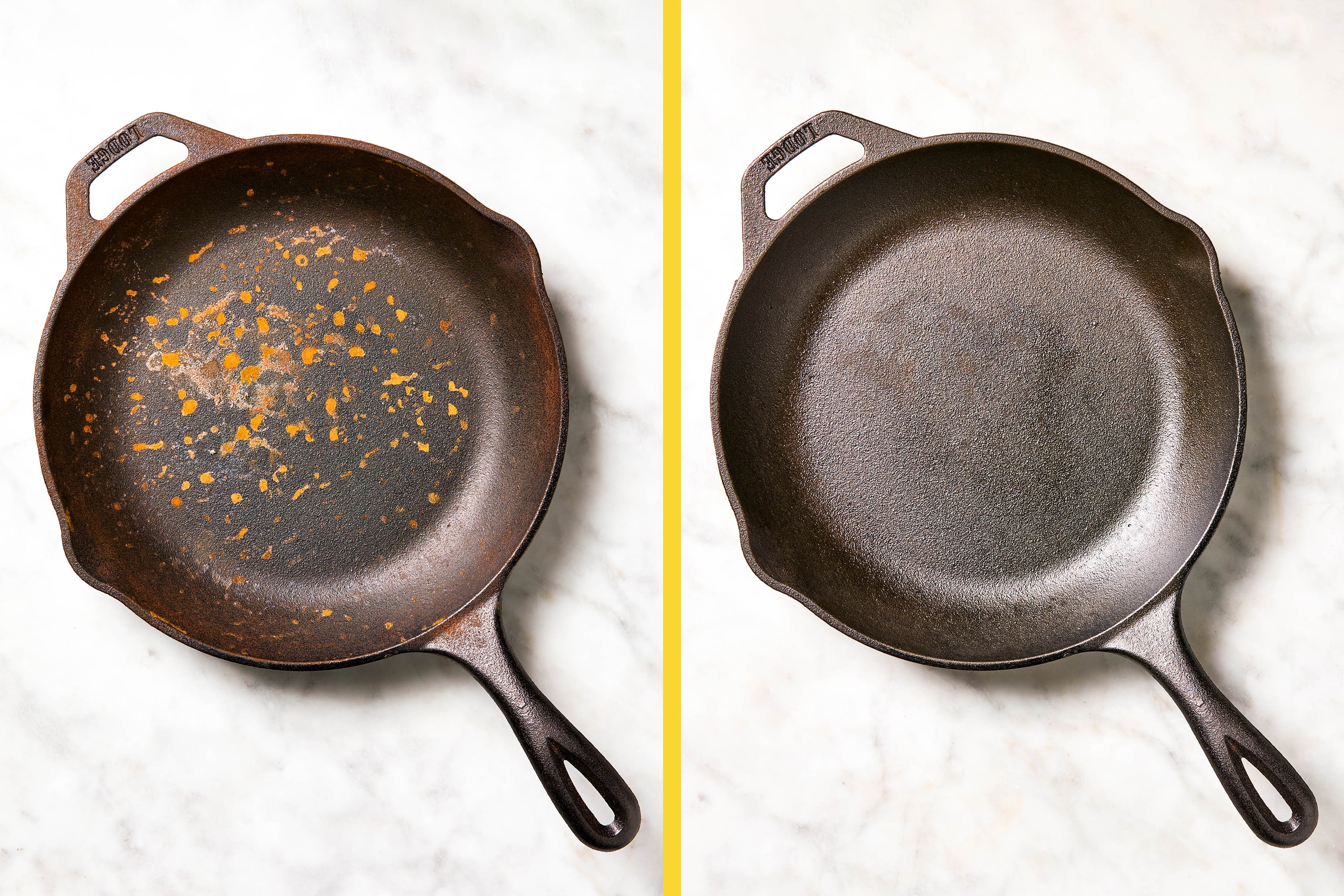
Rust on a cast iron skillet, Dutch oven, or griddle looks alarming, but surface rust usually does not mean the pan is ruined. If you want to remove rust from cast iron cookware, you can usually restore it with mild abrasion, a thorough wash, complete drying, and a fresh layer of seasoning.
This guide is written for home cooks in the United States. It explains practical ways to remove rust from cast iron cookware, when vinegar can help, when electrolysis may be useful, and how to prevent rust from returning.
What You Need Before You Start
You need a way to remove the rust without leaving harmful residue or damaging the iron. Gather the supplies that match the method you plan to use.
For light or moderate rust, use:
- Coarse salt or baking soda
- A stiff nylon brush, scrub pad, or steel wool
- Dish soap
- White vinegar
- Water
- Clean towels
- A high-smoke-point cooking oil, such as canola, vegetable, or grapeseed oil
- An oven or stovetop
For heavy rust, you may also need:
- A wire brush
- A drill with a wire-wheel attachment
- A plastic tub
- A battery charger or low-voltage power supply for electrolysis
- Washing soda
- Protective gloves and eye protection
Do not use a wire wheel or power tool unless you can control it safely. It can throw small metal wires and may remove more iron than needed.
Check the cookware first
Before cleaning, inspect the pan in bright light.
- Orange or reddish film: Usually surface rust. This is normally removable.
- Flaking rust: Needs deeper scrubbing and may require more than one treatment.
- Deep pits: The pan may still be usable, but the cooking surface will be uneven.
- Cracks, holes, or a badly warped base: Cleaning will not repair the damage. Replace the cookware.
- Sticky black coating: This is often old seasoning or burnt oil, not rust.
A magnet can help confirm that a rusty area is iron, but it cannot show whether the pan has a crack or weak spot.
The Best Method for Most Rusty Cast Iron
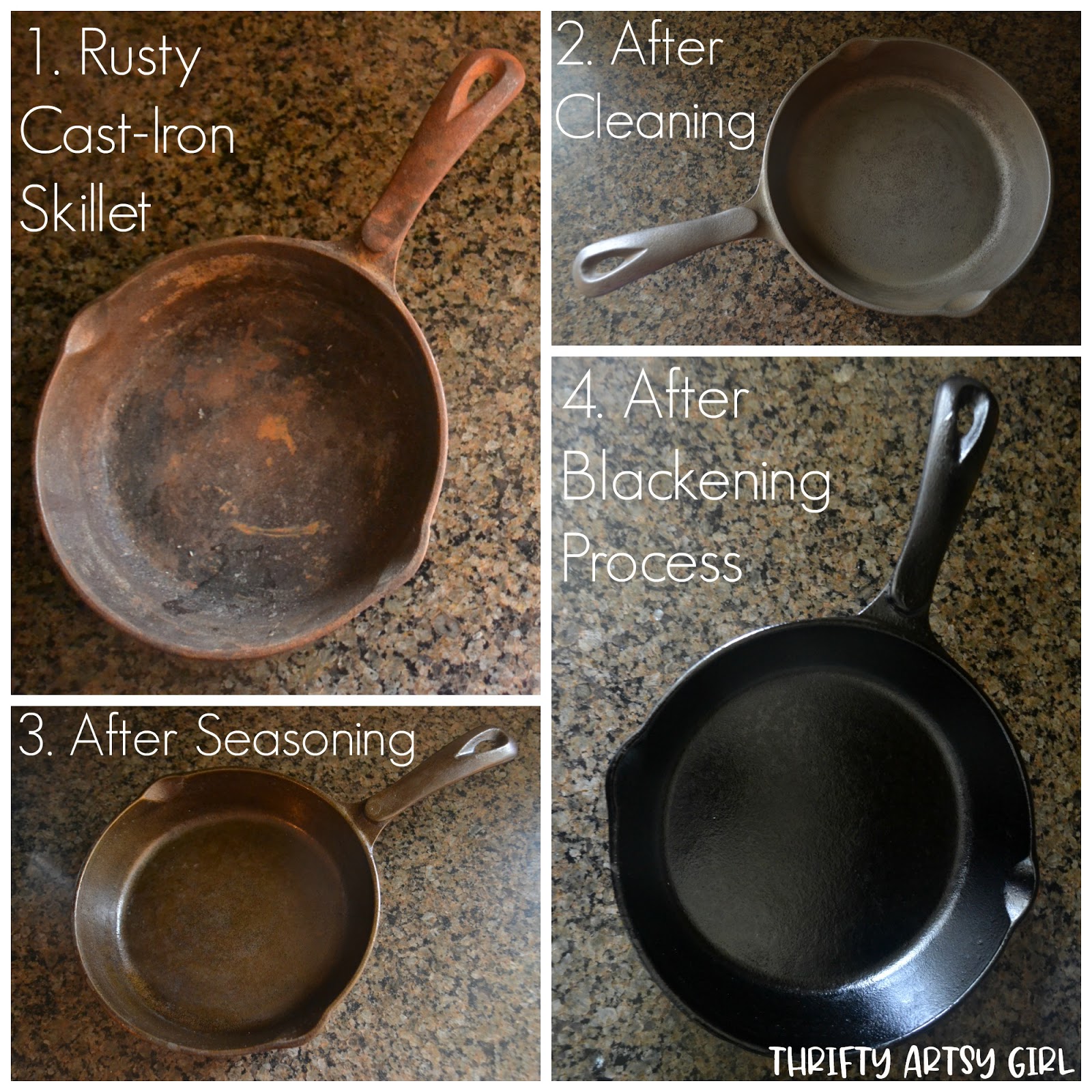
For most skillets and Dutch ovens, scrub the rust away, use a short vinegar soak only when needed, then reseason the cookware.
Step 1: Remove loose rust
Brush the pan under running water. Use a stiff brush, coarse sponge, or steel wool to loosen flakes and powder.
For light rust, sprinkle coarse salt into the dry pan. Add a few drops of water and scrub the salt over the rusty area. The salt acts as a mild abrasive.
For heavier rust, use steel wool or a wire brush. Scrub until the orange color is gone or greatly reduced. You do not need to make the iron look polished.
Step 2: Use vinegar only for stubborn rust
If scrubbing does not remove the rust, mix equal parts distilled white vinegar and water in a container. Place the cookware in the solution so the rusty areas are covered.
Check the pan every 15 to 30 minutes. Remove it as soon as the rust softens. A short soak may work; a long soak can attack the iron itself.
Do not leave cast iron in vinegar for hours without checking it. Vinegar is an acid. It can remove rust, but it can also dull the metal and create a rough gray surface if exposure continues too long.
After the rust loosens, scrub the pan again with steel wool or a stiff brush.
Step 3: Wash away rust and vinegar
Wash the cookware with hot water and a small amount of dish soap. Modern dish soap is suitable for this cleaning step because the old seasoning has already been removed or damaged.
Rinse well. Any remaining vinegar can affect the new seasoning, so do not skip this step.
Step 4: Dry the pan completely
Dry the cookware with a towel. Then place it over low to medium heat for several minutes.
This step matters because even a small amount of water can cause flash rust. Flash rust is a thin orange film that forms quickly on bare, damp iron.
Step 5: Apply a thin coat of oil
Add about 1 teaspoon of cooking oil to a standard 10- to 12-inch skillet. Rub the oil over the inside, outside, handle, and bottom.
Then wipe the pan until it looks almost dry. Too much oil can leave a sticky or uneven coating.
Step 6: Bake the new seasoning
Place the oiled cookware upside down in an oven. Put a sheet of foil on the rack below it to catch drips.
Bake at about 450°F for 1 hour. Turn off the oven and let the cookware cool inside.
Follow the care instructions from the cookware maker if they specify a different temperature or process. Cast iron handles can become very hot, so use thick oven mitts.
Step 7: Repeat if needed
One seasoning cycle may not restore a smooth, dark surface. If the pan still looks dry or uneven, apply another thin coat of oil and repeat the baking step.
The goal is not instant perfection. A good cooking surface develops through several thin coats and regular use.
How to Remove Light Rust Without Vinegar
You can usually remove a small rust spot without soaking the whole pan.
- Rinse the area with warm water.
- Add a small amount of coarse salt or baking soda.
- Scrub with steel wool or a stiff brush.
- Rinse the pan.
- Dry it over low heat.
- Rub on a very thin coat of oil.
- Heat the pan briefly on the stovetop or bake it to renew the surface.
This method is useful when rust appears around the rim, under the handle, or in one small patch.
Do not use excessive force on a thin vintage pan. Remove the rust in stages, and stop when the iron looks clean enough to season.
How to Remove Heavy Rust From Cast Iron
Heavy rust may need a stronger mechanical method or electrolysis. Choose the least aggressive method that can do the job.
Mechanical scrubbing
A wire brush can remove thick rust and loose scale. Scrub outdoors or in a well-ventilated area, and wear eye protection.
A drill-mounted wire wheel is faster, but it carries more risk. Keep both hands on the tool, secure the cookware, and avoid removing sound metal. Do not use a grinding wheel or abrasive disc that can reshape the cooking surface.
After mechanical cleaning, wash, dry, oil, and season the pan.
Electrolysis
Electrolysis can remove heavy rust from cast iron without aggressive scraping. It uses a low-voltage electrical current in a washing-soda solution to loosen iron oxide.
A basic setup includes:
- A nonmetal plastic container
- Water
- Washing soda
- A sacrificial piece of plain steel
- A low-voltage battery charger
- Gloves and eye protection
The rusty cookware connects to the negative terminal. The sacrificial steel connects to the positive terminal. The two metals must not touch.
Electrolysis creates hydrogen and oxygen gases. Use it outdoors or in a very well-ventilated space. Keep sparks, flames, and cigarettes away. Do not use stainless steel as the sacrificial metal because the process may release harmful chromium compounds.
Disconnect the power before touching the setup. After treatment, scrub the loosened residue away, wash the cookware, dry it with heat, and season it at once.
If you are not familiar with electrical equipment, do not improvise an electrolysis system. Mechanical cleaning or a professional restoration service may be safer.

How to Reseason Cast Iron After Rust Removal
Rust removal strips away some or all of the old seasoning. Reseasoning adds a new protective layer made from heated, hardened oil.
Use this process:
- Start with clean, dry cookware.
- Rub on a thin coat of high-smoke-point cooking oil.
- Wipe away excess oil until the surface looks nearly dry.
- Place the cookware upside down in an oven.
- Bake at about 450°F for 1 hour.
- Let it cool in the oven.
- Repeat for additional thin coats if the surface looks uneven.
A thin coat works better than a thick one. Thick oil may turn gummy, form soft patches, or become blotchy.
The first few meals after reseasoning should contain some oil. Foods such as bacon, sautéed vegetables, or cornbread can help maintain the coating. Acidic foods, including tomatoes and vinegar-based sauces, may weaken new seasoning if cooked for a long time.
Signs that seasoning is working
A properly seasoned pan may have:
- A dark brown or black surface
- A slight satin sheen
- Less sticking during cooking
- No orange rust after washing and drying
- No sticky oil residue
Seasoning does not need to look perfectly smooth or glossy. A well-used pan can have color changes and small marks while still cooking well.
Which Rust Removal Method Should You Choose?
Use the simplest method that matches the condition of the cookware.
| Rust condition | Best first method | Main caution |
|---|---|---|
| Small orange spot | Salt or baking soda with scrubbing | Dry and oil the area right away |
| Light surface rust | Steel wool or a stiff brush | Do not leave the pan wet |
| Rust over much of the pan | Short vinegar soak plus scrubbing | Check often and avoid a long soak |
| Thick, flaky rust | Wire brush or careful power-tool work | Wear eye protection |
| Severe rust on valuable cookware | Electrolysis or professional restoration | Requires electrical and ventilation safety |
| Cracks, holes, or major warping | Replacement | Cleaning cannot restore structural strength |
The key trade-off is speed versus control. Hand scrubbing takes longer but gives you more control. Power tools and electrolysis can save time but require more safety precautions

What Not to Use on Rusty Cast Iron
Some cleaning methods can create safety problems or damage the cookware.
Do not mix cleaning chemicals
Never mix vinegar with bleach, ammonia, drain cleaner, or other household chemicals. Dangerous vapors or reactions can result.
Avoid chlorine bleach
Bleach is not needed to remove rust and can damage metal. It also creates a chemical hazard if mixed with other cleaners.
Do not use oven cleaner casually
Some oven cleaners contain strong alkalis and require careful handling. They may also damage nearby surfaces, labels, or skin. For most home rust problems, scrubbing and a controlled vinegar treatment are easier to manage.
Do not leave the pan wet
Water is the main cause of recurring surface rust. Do not air-dry cast iron after washing.
Do not apply a thick layer of oil
A heavy oil layer often turns sticky instead of hardening into seasoning. Wipe off the excess before heating.
Do not cook in deeply pitted or flaking cookware without inspection
Small pits are usually a cosmetic and performance issue. Deep cavities, cracks, or loose flakes require more caution. If the cookware sheds metal or has structural damage, replace it.
Can You Use Dish Soap on Cast Iron?
Yes. Dish soap can be used when cleaning rusty cookware or removing old seasoning.
The idea that all soap will destroy cast iron comes from older soap formulas and older seasoning practices. A small amount of modern dish soap will not harm properly bonded seasoning during normal washing.
For routine care, use warm water, a small amount of dish soap if needed, and a soft brush. Dry the pan on the stovetop and apply a very thin coat of oil.
Why Did My Cast Iron Rust Again?
Rust usually returns because moisture remains on the iron or the protective seasoning is too thin.
Common causes include:
- The pan was left to air-dry.
- Food or water stayed in the pan overnight.
- The cookware was stored with its lid tightly closed while damp.
- The oil layer was too thin or missing.
- The pan was washed with a strong cleaner and not reseasoned.
- The cookware was stored in a humid cabinet.
- Acidic food removed part of the seasoning.
To prevent new rust, dry the pan with heat after every wash. Apply a very thin coat of oil before storage. Store the lid slightly open, or place a folded paper towel between the lid and pan to allow airflow.

Can You Remove Rust From an Enameled Cast Iron Pan?
Do not treat enameled cast iron like bare cast iron.
The colored enamel coating is a glass-like surface bonded to the iron. Do not use steel wool, a wire wheel, or harsh abrasive tools on it. These can scratch or chip the enamel.
For surface stains inside enameled cookware, use warm water, dish soap, and a soft sponge. Follow the manufacturer’s care instructions for baked-on residue.
If the enamel is chipped on the cooking surface, stop using the cookware until the maker confirms that it is safe. The exposed iron can rust, and loose enamel may break away during cooking.
How to Clean Cast Iron After Cooking
Routine care helps prevent the need for major rust removal.
- Let the cookware cool enough to handle safely.
- Scrape away food residue.
- Wash with hot water and a small amount of dish soap.
- Use a soft brush or nonmetal scrub pad.
- Rinse well.
- Dry with a towel.
- Heat the pan briefly to remove hidden moisture.
- Wipe on a very thin layer of oil.
Do not pour cold water into a very hot pan. Sudden temperature changes can cause thermal shock and may crack or warp cookware.

Frequently Asked Questions
Is rusty cast iron safe to use?
Small amounts of surface rust can usually be removed before the cookware is used again. Scrub away the rust, wash the pan, dry it fully, and reseason it.
Do not use cookware with deep cracks, holes, severe flaking, or structural damage. When in doubt, replace it or have it assessed by a qualified restoration professional.
Does vinegar ruin cast iron?
Vinegar does not automatically ruin cast iron, but prolonged exposure can damage the iron surface. Use a diluted solution, check the cookware often, and rinse it well after treatment.
Can baking soda remove rust from cast iron?
Baking soda can help scrub away light surface rust. It is a mild abrasive, not a strong rust dissolver. For heavy rust, steel wool, a brush, a short vinegar treatment, or another suitable method may work better.
How long should cast iron bake after oiling?
A common reseasoning method is about 1 hour at 450°F, followed by cooling in the oven. The exact temperature may vary by oil and manufacturer instructions. Always wipe away excess oil before baking.
Can I save a cast iron pan with deep rust?
Often, yes, if the rust is only on the surface. Deep pitting may remain after cleaning but does not always prevent cooking. Cracks, holes, serious warping, or unstable handles are different problems and may make the pan unsafe to use.
Key Takeaways
- Remove loose rust with a brush, steel wool, salt, or baking soda.
- Use diluted white vinegar only for stubborn rust, and check the pan often.
- Never leave cast iron wet after cleaning.
- Dry it with heat and apply a very thin coat of oil.
- Reseason the cookware in an oven at about 450°F for 1 hour.
- Avoid bleach, chemical mixtures, and abrasive tools on enameled cast iron.
- Replace cookware with cracks, holes, severe flaking, or major warping.
Conclusion
To remove rust from cast iron cookware, scrub away the surface rust, use a short diluted vinegar soak only when needed, wash the pan, dry it with heat, and rebuild the seasoning with a thin coat of oil.
Most rusty skillets can be restored with patience. The most important habit afterward is simple: never store cast iron damp. Dry it fully, oil it lightly, and your cookware should remain ready for the next meal.
Pingback: How To Clean Magnalite Cookware: Quick Easy Methods - Smart Find Today