
In a U.S. kitchen, an espresso machine turns water, heat, pressure, and finely ground coffee into a small, concentrated drink. If you’re wondering how does an espresso machine work, a pump or lever pushes hot water through a compact bed of coffee, while the machine’s heating system controls the water and steam. The exact controls vary, but the basic process is the same.
The main parts of an espresso machine
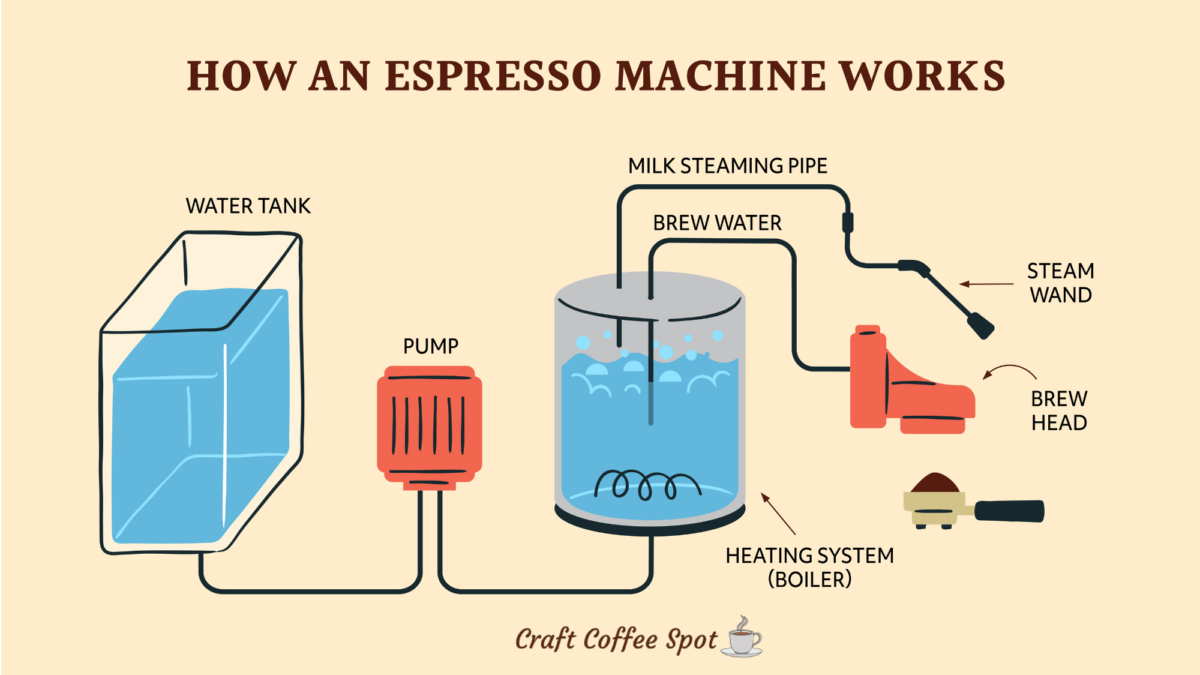
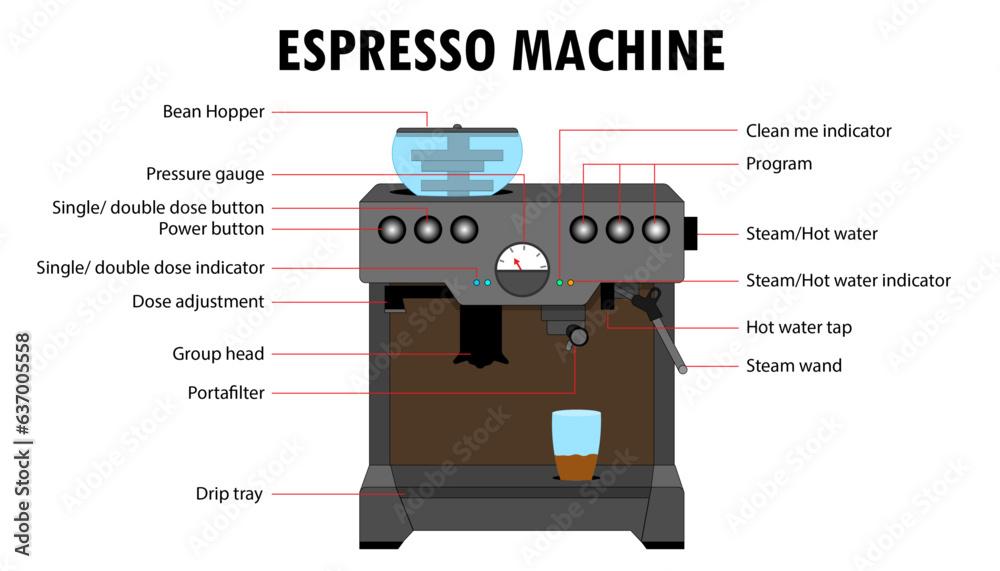
Most espresso machines use the same core parts to move, heat, and control water. Knowing what each part does makes the machine easier to use and helps you spot problems.
| Part | What it does |
|---|---|
| Water tank or water line | Supplies water to the machine |
| Pump or lever | Moves water toward the coffee and creates pressure |
| Boiler or heating system | Heats water for brewing and, on many machines, steam |
| Group head | Directs hot water into the coffee basket |
| Portafilter and basket | Hold the ground coffee in place |
| Shower screen | Spreads water over the coffee bed |
| Steam wand | Uses steam to heat and texture milk |
| Pressure valve or control system | Helps manage pressure, depending on the machine design |
The portafilter locks into the group head. Inside it, the basket holds a level bed of finely ground coffee. The machine sends hot water through the group head and shower screen, then through the coffee and into the cup.
Some machines add parts such as a flow meter, pressure gauge, or electronic temperature control. These can help manage or display parts of the process, but they do not change the basic path from water supply to cup.

What happens when you pull an espresso shot?
A shot is made by directing hot water through a packed bed of ground coffee. Here is the usual sequence in a pump-driven machine:
- The machine heats water. A boiler, thermoblock, or similar system brings water to a brew temperature.
- The pump moves water. When you start a shot, the pump sends water toward the group head.
- Water reaches the coffee. The shower screen spreads it over the grounds in the basket.
- Pressure pushes water through the coffee. The water extracts soluble compounds and carries small particles and oils into the cup.
- The drink flows from the basket. The shot ends when you stop the pump or the machine reaches its programmed limit.
Some machines first wet the coffee at low pressure or with a gentle flow. This is called preinfusion. It may help wet the coffee bed more evenly, but the feature and its effect vary by machine and recipe.
Espresso often has a light-brown foam called crema. It forms as gases and coffee oils disperse in the drink. Crema can be part of espresso, but its presence alone does not prove that a shot tastes good.
What pressure, heat, and grind do
Pressure, temperature, and grind size affect how water moves through the coffee and what the shot tastes like. A change in one can alter the time and flavor of the extraction.
Many pump machines are described as operating at about 9 bar during brewing. That is a common reference point, not a rule for every machine or coffee. A pump labeled with a higher maximum pressure does not mean the machine brews at that pressure; the pressure at the coffee depends on the machine’s design and controls.
| Variable | What it changes | A useful first check |
|---|---|---|
| Grind size | How easily water passes through the coffee | If a shot runs very fast, try a finer grind; if it barely flows, try a coarser grind |
| Dose | The amount of dry coffee in the basket | Use a dose that fits the basket without pressing the coffee into the shower screen |
| Brew temperature | The rate and balance of extraction | Follow the machine’s guidance; many brew guides use roughly 195–205°F |
| Pressure and flow | How water moves through the coffee bed | Use the machine’s settings and recipe as a starting point |
| Coffee freshness | How the coffee behaves and tastes | Store beans sealed and dry, and adjust the recipe as they age |
A common starting recipe uses a 1:2 ratio: for example, 18 grams of dry coffee to about 36 grams of espresso. This is a starting point, not a required standard. A shorter or longer yield may suit a particular coffee or taste better to you.
A scale can help you repeat a recipe. For a broader overview of brew guidance, see the Specialty Coffee Association’s coffee standards. Machine makers may set different recommendations, so check the manual for your model.

A practical way to pull a shot
Start with the machine’s manual and a repeatable recipe. Small, measured changes are easier to judge than changing the grind, dose, and yield all at once.
- Fill and warm the machine. Use the water type and setup recommended in the manual. Give the machine time to heat.
- Prepare the basket. Add a measured dose of ground coffee. Distribute it evenly, then tamp level if your machine requires tamping.
- Lock in the portafilter. Make sure it is seated securely. Start the shot soon after preparing the coffee.
- Track the output. If possible, place a scale under the cup and stop the shot at your chosen beverage weight.
- Taste and adjust. If the shot tastes too sharp or thin, try a slightly finer grind or a different yield. If it tastes harsh or runs very slowly, try a slightly coarser grind or a different yield.
Use one change at a time. For instance, keep the dose and target drink weight the same while adjusting the grind. That gives you a clearer sense of what changed.
Shot time is useful, but it is not a pass-or-fail test. Timing can vary with the coffee, grind, basket, machine, and when you start the timer. Keep your timing method consistent, and use taste and beverage weight as well.

How common espresso machine types differ
Machine types differ mainly in how they move water, heat it, and handle milk steaming. The right type depends on how much control and hands-on work you want.
| Machine type | How it works | What to expect |
|---|---|---|
| Pump-driven | An electric pump moves water through the coffee | Common in home machines; controls and automation vary |
| Lever | A hand-operated lever moves water through the coffee | Requires manual effort and may give the user more control over flow |
| Super-automatic | The machine often grinds, doses, brews, and may handle milk | Reduces steps, but settings and cleaning depend on the model |
Heating systems also vary. A single-boiler machine uses one boiler for brewing and steam, so it may need time to change between the two. A dual-boiler machine has separate boilers for brewing and steam. A heat-exchanger design heats brew water through a system linked to a steam boiler. Thermoblocks and thermocoils heat water as it passes through a heated unit.
These designs involve trade-offs in size, warm-up, workflow, and control. The machine’s manual is the best source for its specific warm-up process, settings, and limits.

Common espresso problems and what to check
A poor shot does not always mean the machine is broken. Check the coffee, grind, and setup first, then look for signs that need cleaning or service.
| What you notice | Common things to check |
|---|---|
| The shot runs too fast | The grind may be too coarse, the dose may be low, or the coffee may not be distributed evenly |
| The shot barely drips | The grind may be too fine, the basket may be overfilled, or the coffee may be packed too tightly |
| The shot tastes sour or thin | Try a finer grind or a different yield; also check that the machine is fully heated |
| The shot tastes bitter or harsh | Try a coarser grind or a shorter yield; make sure the machine and basket are clean |
| Water leaks around the portafilter | Check that the basket rim and group-head seal are clean, and that the portafilter is seated correctly |
| Little or no water comes from the group head | Check the tank, water supply, and cleaning needs listed in the manual |
These are starting checks, not certain diagnoses. If the machine makes unusual noises, leaks from inside the case, trips a breaker, or fails to heat, stop using it and follow the maker’s service guidance. Do not open the machine while it is plugged in or hot.

Cleaning and safety basics
Regular cleaning helps prevent old coffee oils and mineral scale from affecting taste or flow. Follow the cleaning schedule and products listed in your machine’s manual, since not every machine uses the same process.
After brewing, remove used coffee and rinse the basket and portafilter. Wipe the group area as directed. If you steam milk, wipe the wand at once and clear it as the manual instructs. Some machines support backflushing; do it only if the model is designed for it, and use the method and cleaner the maker specifies.
Descaling needs vary with water hardness and machine design. Use only the descaling method approved for your model. A product or process that works for one machine may damage another.
Hot water, steam, and pressure can burn you. Do not remove a portafilter while a shot is under pressure. Let the machine release pressure as designed, and let parts cool before handling them. Unplug the machine before cleaning any area the manual says to access.

Frequently asked questions
Does an espresso machine need 15 or 9 bars of pressure?
The number on a pump may describe its maximum rating, not the pressure used at the coffee during brewing. About 9 bar is a common brewing reference, but machine design and settings affect actual pressure.
Can an espresso machine make regular coffee?
Some machines can make a longer drink by sending more water through the coffee, but that does not make the result identical to drip coffee. Many espresso machines also have a hot-water outlet, which can be used to add hot water to espresso.
Why does espresso have crema?
Crema forms when gas and coffee oils disperse in the brewed drink. The amount can vary with the coffee and how it was stored and brewed. Crema alone is not a reliable measure of flavor or quality.
Does every espresso machine have a steam wand?
No. Some machines have a steam wand, while others use a separate milk system or do not make steamed milk at all. Check the product manual to see what your model supports.
What water should I use in an espresso machine?
Use water that meets the machine maker’s guidance. Water with too many minerals can contribute to scale, while unsuitable water may affect taste or machine parts. Do not assume that bottled, filtered, or softened water is right for every model.
The bottom line
An espresso machine heats water, moves it under pressure, and sends it through finely ground coffee. The group head, basket, pump or lever, and heating system each play a part in that path.
For a more consistent cup, start with the machine manual, weigh your coffee and drink, and change one brewing variable at a time. Clean and descale only as the maker directs.