
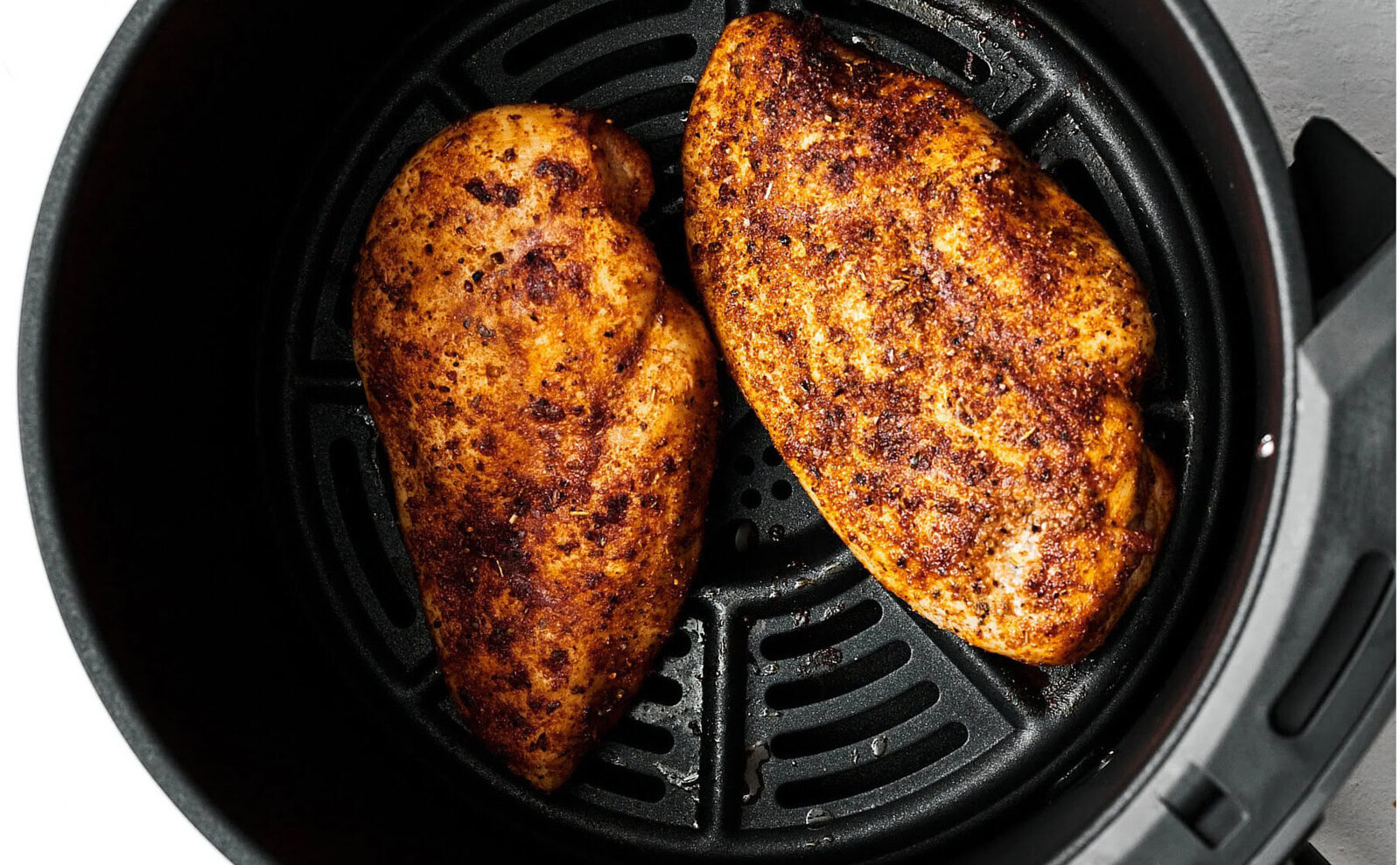
In a U.S. kitchen, boneless, skinless chicken breast usually takes 16 to 22 minutes at 375°F in an air fryer. The exact time depends on the breast’s thickness, weight, starting temperature, and your air fryer model.
The safe endpoint is more reliable than the clock: chicken breast must reach 165°F in the thickest part, according to the USDA. Use an instant-read thermometer, because two chicken breasts that look the same size may cook at different speeds.
Introduction
Air-fried chicken breast can be fast, crisp, and tender. It can also turn dry when the meat is thin, the heat runs high, or the cook relies only on time.
This guide uses U.S. food-safety guidance and common air-fryer settings. It explains cooking times for fresh, frozen, boneless, bone-in, and thin chicken breasts, plus the signs that show the meat is ready.

Quick Answer: How Long Does Chicken Breast Take in an Air Fryer?
Cook boneless, skinless chicken breast at 375°F for about 16 to 22 minutes, turning it halfway through when your air fryer’s design allows.
Start checking the temperature near the early end of the range. Remove the chicken when the thickest part reaches 165°F.
| Chicken breast type | Air-fryer temperature | Approximate cooking time |
|---|---|---|
| Boneless, skinless, 6–8 ounces | 375°F | 16–22 minutes |
| Thin or pounded breast | 375°F | 10–15 minutes |
| Large or very thick breast | 375°F | 22–30 minutes |
| Bone-in, skin-on breast | 375°F | 25–35 minutes |
| Frozen boneless breast | 375°F | 25–35 minutes |
| Chicken tenderloins | 375°F | 10–14 minutes |
These times are estimates, not guarantees. Thickness affects cooking speed more than weight alone. A wide, thin breast may cook sooner than a small but thick breast.
The simple rule
Cook by temperature, not by time. Insert a food thermometer into the thickest section from the side. Avoid touching bone, the basket, or the cooking tray, since these can give a false reading.
The USDA lists 165°F as the safe minimum internal temperature for poultry. Color is not a dependable safety test. Chicken can look white before it reaches a safe temperature, or remain slightly pink after reaching it.
Best Air-Fryer Method for Fresh Chicken Breast
Use this method for fresh or fully thawed, boneless, skinless chicken breasts.
What you need
- Boneless, skinless chicken breasts
- 1 to 2 teaspoons of oil
- Salt and your preferred seasonings
- An air fryer
- An instant-read food thermometer
- Tongs
Step-by-step instructions
-
Pat the chicken dry.
Dry surfaces brown better and help seasoning stick. Do not rinse raw chicken. Washing can spread bacteria around the sink and nearby surfaces. -
Trim excess fat or loose pieces.
Leave the main breast intact so it cooks evenly. -
Even out the thickness if needed.
If one end is much thicker, place the breast between sheets of plastic wrap and gently pound it to an even thickness. Do not flatten it too thin. -
Add a small amount of oil.
A light coating helps seasonings adhere and can improve browning. Too much oil may smoke or make the surface greasy. -
Season both sides.
Salt, black pepper, paprika, garlic powder, onion powder, and dried herbs work well. Avoid piling on wet sauce at the start, since it can slow browning. -
Preheat if your model recommends it.
Set the air fryer to 375°F. Some models heat quickly without preheating, while others cook more evenly when preheated. Follow the appliance manual if it gives a specific instruction. -
Arrange the chicken in one layer.
Leave space around each piece. Crowding blocks hot air and can create pale, uneven areas. -
Cook for 8 to 11 minutes.
Flip the chicken if your model cooks unevenly or if the manufacturer recommends turning food. -
Continue cooking until the thickest part reaches 165°F.
Begin checking with a thermometer before the shortest estimated time has passed. -
Rest the chicken for about 5 minutes.
Resting can help the juices spread through the meat. It does not replace reaching 165°F during cooking.
How to tell it is done
The best sign is an internal temperature of 165°F. The meat should also feel firm but not hard, and the juices should not look raw.
Do not cut into the chicken several times to check it. Each cut releases moisture and makes the final result drier. Check once with a thermometer instead.

Air-Fryer Chicken Breast Cooking Times by Thickness
Thickness is the most useful way to estimate cooking time. If possible, measure the thickest point before cooking.
| Approximate thickness | Temperature | Starting time to check |
|---|---|---|
| About ½ inch | 375°F | 8–12 minutes |
| About 1 inch | 375°F | 16–22 minutes |
| About 1½ inches | 375°F | 22–28 minutes |
| More than 1½ inches | 375°F | 25–35 minutes |
These ranges assume boneless, skinless chicken that is not frozen. The chicken may need more or less time based on its starting temperature and the air fryer’s heating pattern.
A thick chicken breast can brown on the outside while the center remains undercooked. If the outside is dark but the center is below 165°F, lower the temperature to 350°F and continue cooking until safe. This gives the middle more time to heat without over-browning the outside.
If the center reaches 165°F but the surface looks pale, cook for another 1 to 2 minutes at a higher setting. Watch it closely, because extra cooking can dry lean breast meat.
Why air fryers vary
Air fryers differ in:
- Heating power
- Basket shape
- Fan speed
- Basket size
- Temperature accuracy
- Distance between the food and heating element
For this reason, a time that works in one U.S. household may not work in another. Treat the first batch as a calibration step. Record the temperature, time, breast thickness, and final temperature so you can adjust future batches.

How Long to Cook Frozen Chicken Breast in an Air Fryer
Frozen boneless chicken breast often takes 25 to 35 minutes at 375°F, but the time varies widely with thickness and whether the pieces are stuck together.
For the best result:
- Place the frozen breasts in a single layer.
- Cook for about 10 minutes.
- Open the basket and separate the pieces if possible.
- Add oil and seasoning once the surface has softened.
- Continue cooking until the thickest part reaches 165°F.
- Turn the chicken during cooking if needed for even browning.
Frozen chicken may cook unevenly if one piece is much thicker than another. Check every piece, especially when their sizes differ.
Do not rely on the outside appearance. Frozen meat can brown before the center is fully cooked. A thermometer remains essential.
Some air-fryer manufacturers advise against cooking certain frozen foods or recommend a specific method. Check your model’s manual for limits and instructions.

How Long to Cook Bone-In or Skin-On Chicken Breast
Bone-in, skin-on chicken breasts generally need 25 to 35 minutes at 375°F. Very large pieces may take longer.
Place the chicken skin-side up if you want the skin to brown. If the skin becomes dark before the meat reaches 165°F, reduce the heat to 350°F and continue cooking.
The bone changes how heat moves through the meat. The area near the bone may cook more slowly, so place the thermometer in the thickest meat without touching the bone.
For crisp skin, pat it dry before seasoning. A small amount of oil can help, but skin already contains fat, so heavy oil is usually unnecessary.

How to Keep Air-Fried Chicken Breast Juicy
Chicken breast is naturally lean, so it can become dry when overcooked. A few simple changes help:
Choose breasts with a similar thickness
Uniform pieces finish at nearly the same time. If one breast is very thick, pound it gently or cut it into cutlets.
Use a thermometer
A thermometer helps you stop cooking soon after the chicken reaches a safe temperature. Guessing often leads to several extra minutes of heat.
Avoid very high heat for thick pieces
Temperatures such as 400°F can brown the outside quickly. That may work for thin pieces, but thick breasts can dry on the outside before the center is ready.
Use a short rest
A five-minute rest helps the juices settle. Cover loosely with foil if needed, but do not seal the chicken tightly, or the crust may soften.
Consider a brief marinade
A marinade can add flavor and moisture to the surface. It cannot make unsafe chicken safe, and acidic marinades can make the outer texture soft if the chicken sits too long.
Do not reuse marinade that touched raw chicken unless you boil it first. A separate portion is safer and easier.

Common Problems and How to Fix Them
The chicken is dry
Likely causes:
- It cooked past 165°F by a wide margin.
- The breast was very thin.
- The air fryer runs hotter than its display suggests.
- The chicken was left in the hot basket for a long time.
Next time: check earlier, use a lower temperature for thick pieces, and remove the chicken promptly when it reaches 165°F.
The outside is burned but the center is raw
Likely causes:
- The chicken is unusually thick.
- The temperature is too high.
- The basket is too close to the heating element.
Next time: use 350°F to 375°F, flatten the thick end, or finish at a lower temperature.
The chicken is pale
Likely causes:
- The surface was wet.
- The basket was crowded.
- Too much liquid seasoning was used.
- The cooking temperature was low.
Next time: pat the chicken dry, use a light oil coating, and leave space between pieces.
The chicken cooks unevenly
Likely causes:
- The breasts have different thicknesses.
- The air fryer has a strong hot spot.
- Pieces are touching.
Next time: choose similar-size pieces, arrange them in one layer, and rotate the basket if the manual permits.
The thermometer gives different readings
Check several spots in the thickest part. Do not let the probe touch bone or the basket. If readings vary, use the lowest reliable reading as your safety guide and continue cooking until that area reaches 165°F.
Food-Safety Rules for Air-Fried Chicken
Follow these basic U.S. food-safety practices:
- Keep raw chicken separate from ready-to-eat food.
- Wash hands with soap after handling raw chicken.
- Clean cutting boards, plates, and utensils that touched raw chicken.
- Do not rinse raw chicken.
- Cook chicken to 165°F.
- Refrigerate leftovers within 2 hours, or within 1 hour when temperatures are above 90°F.
- Store leftovers in a refrigerator at 40°F or below.
- Use refrigerated cooked chicken within 3 to 4 days, following USDA guidance.
- Reheat leftovers to 165°F.
If the chicken smells sour, feels unusually sticky, or has been left at room temperature too long, discard it. Cooking cannot reliably correct every food-safety problem caused by poor storage.
For official guidance, see the USDA’s Safe Minimum Internal Temperature Chart and Chicken From Farm to Table.

Frequently Asked Questions
Can I cook chicken breast at 400°F in an air fryer?
Yes, but the cooking time will usually be shorter and the outside may brown faster. Start checking thin breasts after about 10 minutes. For thick breasts, 375°F often gives the center more time to cook before the outside becomes too dark.
Should I flip chicken breast in an air fryer?
Flipping is not always required, but it can help promote even browning. Follow your air fryer manual, especially if the basket or heating element has a special design.
Do I need to preheat the air fryer?
Not always. Preheating can make cooking more consistent, but many air fryers heat quickly without it. If you skip preheating, the chicken may need a few extra minutes. Always use the internal temperature as the final check.
Can I put raw chicken directly in the air fryer?
Yes. Place raw chicken in a clean basket and cook it fully to 165°F. Wash hands and clean any surfaces that touched the raw meat.
How long should air-fried chicken breast rest?
Rest it for about 5 minutes before slicing. Resting improves texture, but the chicken must already have reached 165°F.
Can I cook chicken breasts together if they are different sizes?
You can, but they may finish at different times. Remove smaller pieces when they reach 165°F and continue cooking the larger ones.
Final Takeaway
For most fresh, boneless, skinless chicken breasts, use 375°F for 16 to 22 minutes. Begin checking early, turn the chicken when useful, and confirm that the thickest part reaches 165°F.
The most dependable method is simple: keep the pieces evenly thick, avoid crowding the basket, and let a food thermometer—not appearance alone—decide when the chicken is done.