
Introduction
To clean an outdoor gas grill, shut off the burners and gas supply, let the grill cool fully, then clean the grates, inside surfaces, burners, and grease tray as your grill’s manual directs. Learning how to clean outdoor gas grill properly helps maintain its performance. Finish by putting each part back in place and checking for safe operation before you cook.
A clean grill is easier to use and can help limit grease flare-ups. You do not need special tools for most routine jobs, but the right method depends on the grill’s materials and fuel type. If you have a propane grill, use its tank shutoff; if you have a natural-gas grill, use its shutoff valve.

Gather supplies and make the grill safe
Before cleaning, check the owner’s manual for your grill’s cleaning steps and any limits on cleaners or tools. Manuals can differ, especially for ceramic, coated, stainless-steel, and cast-iron parts.
You will usually need:
- A grill brush with bristles in good condition, or a scraper made for grill grates
- Warm water and mild dish soap, if allowed by the manual
- A soft cloth or sponge
- A plastic scraper for stuck-on grease
- A bucket for dirty water
- Gloves, if you want to keep grease off your hands
Turn off all burners and close the gas supply. Let the grill cool completely before you touch or remove parts. Do not clean a hot grill with water or cleaner.
For a propane grill, close the valve on the tank. Do not disconnect the tank unless the manual says to do so for the cleaning task. For a natural-gas grill, close the shutoff valve. If you smell gas, do not start cleaning or try to light the grill; move away and follow your gas supplier’s or emergency service’s instructions.
The U.S. Consumer Product Safety Commission’s grilling safety guidance also stresses using grills outdoors and keeping them away from buildings and other fire hazards. Never use a gas grill in a garage, tent, or enclosed space.

How to clean an outdoor gas grill
Clean the grill from the top down, and keep water and cleaning products away from burner openings and gas parts. The steps below cover routine cleaning; follow your manual if it gives a different method.
1. Remove and clean the grates
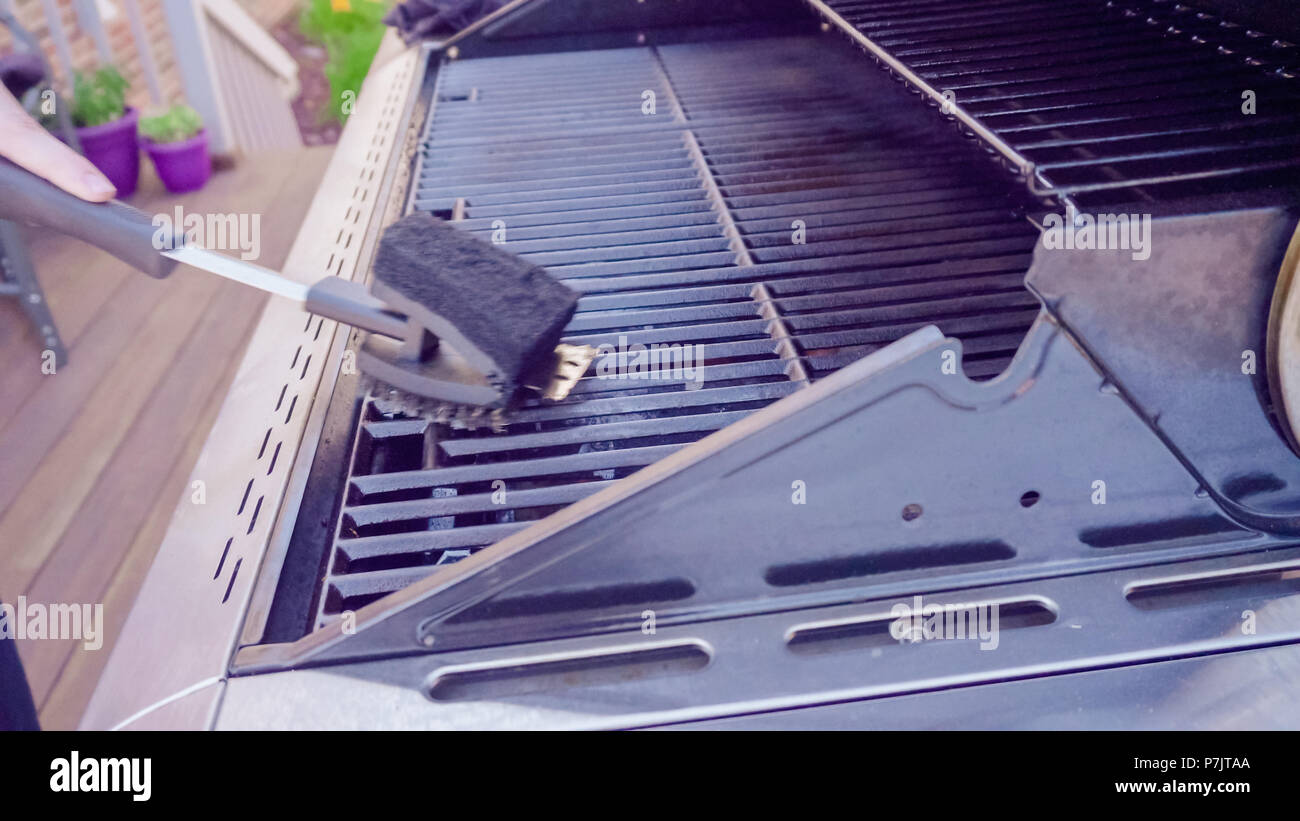
Take out the cooking grates once the grill is fully cool. Scrape off loose food and grease. If the manual allows, wash the grates with warm, soapy water and a non-abrasive sponge.
Rinse the grates and dry them well before putting them back. If you have cast-iron grates, check the manual for care instructions. Some need a thin coat of cooking oil after cleaning to help protect the surface.
If you use a wire brush, inspect it before and after cleaning. Replace it if bristles are loose or worn, and check the grates for any bristles that may have come off. A scraper designed for your grate type is another option.
2. Clean heat tents and the inside of the cook box
Remove the heat tents or flavorizer bars if your grill has them. These parts sit above the burners and help spread heat. Brush or scrape off residue, then wash them only if the manual says it is safe to do so.
Scrape loose debris from the inside of the cook box into the grease tray or a container. Use a plastic scraper or a grill-safe tool. Avoid soaking the cook box or spraying cleaner into burner holes, valves, or ignition parts.
3. Check the burners
Look for visible blockages, damage, or heavy rust on the burners. If the manual permits, brush the outside gently in the direction it specifies. Do not poke holes with a pin or wire, or scrape in a way that could widen or damage them.
Some grills can collect insects or debris in burner tubes. Use the manual’s inspection and cleaning method. If a burner is cracked, badly rusted, or still does not work as expected after cleaning, stop using the grill until the part is checked or replaced.
4. Empty and clean the grease tray
Remove the grease tray or cup and dispose of cooled grease and food scraps. Wash the tray with warm, soapy water if the manual allows, then dry it before reinstalling.
Do not pour grease down a drain. Do not line the tray with foil unless the grill’s manual specifically permits it; a liner placed incorrectly can affect grease flow or heat.
5. Wipe the outside
Use a damp cloth and a cleaner that is safe for your grill’s exterior. For stainless steel, wipe with the grain when the manufacturer recommends it. Test a cleaner on a small, hidden spot first.
Avoid steel wool, harsh oven cleaner, bleach, and abrasive pads unless the manual says they are safe for that surface. These can scratch or damage some finishes.
6. Reassemble and check the grill
Put every part back in its proper place. Make sure the grates, heat tents, grease tray, and other removable parts sit securely.
If you disconnected or disturbed a gas connection, follow the manual’s instructions for checking it before lighting the grill. Never use a flame to look for a gas leak. If you find a leak or smell gas, turn off the supply if you can do so safely, do not use the grill, and contact a qualified service provider or your gas supplier.
How often should you clean a gas grill?
Brush or scrape the cooking grates after each use, once the grill has cooled enough for safe cleaning. A quick wipe can help keep food residue from building up between deeper cleanings.
Clean the grease tray and inspect the inside more often if you grill frequently or cook fatty foods. A fuller clean is also useful at the start or end of the grilling season, but your manual should guide the timing and method.
The right schedule depends on use, not just the calendar. If you see thick grease, blocked openings, or food debris collecting inside, clean those areas before the next cook.

Common cleaning mistakes and warning signs
Do not use water to put out a grease fire. If a fire starts, turn off the burners and gas supply only if you can do so safely, and follow the grill maker’s emergency instructions. If the fire does not stop quickly or you feel at risk, move away and call emergency services.
Avoid pressure-washing the grill. A strong spray can force water into burners, valves, and ignition parts. Also avoid running the grill at extreme heat as a substitute for cleaning; high heat does not remove all grease and can damage parts.
Pay attention to changes in how the grill works. Persistent uneven flames, repeated failure to light, a damaged burner, or a gas odor are reasons to stop using it and check the manual or contact a qualified technician. Do not try to repair gas components unless the manufacturer says the task is suitable for the owner.

Key Takeaways
- Shut off the gas and let the grill cool fully before cleaning.
- Clean grates, heat tents, burners, the cook box, and grease tray using methods approved by the manual.
- Keep water and cleaners out of burner holes and gas parts.
- Check wire brushes for loose bristles, and never use a flame to test for a gas leak.
- Stop using the grill if you smell gas or see damaged parts.
FAQs
Can I clean a gas grill with dish soap and water?
Often, mild dish soap and warm water work for removable grates and grease trays, but check your grill’s manual first. Keep water away from burners, valves, and ignition parts, and dry cleaned parts before reinstalling them.
Should I clean my grill while it is hot?
No. Let the grill cool fully before deep cleaning or removing parts. Some manuals describe brushing grates while they are still warm after cooking, but follow the instructions for your specific grill and avoid touching hot surfaces.
Can I use oven cleaner on grill grates?
Do not use oven cleaner unless the grill maker says it is safe for your grate material. Some cleaners can damage coatings or leave residue that is not meant for cooking surfaces.
What should I do if my grill smells like gas?
Do not light it or use electrical switches nearby. If you can safely reach the shutoff, turn off the gas, move away, and follow instructions from your gas supplier or emergency services. Have the grill checked before using it again.
How do I clean a grill that has not been used in a long time?
Start with the gas shut off and the grill fully cool. Remove debris, inspect the burners and gas connections for damage or blockage, then clean the removable parts using the manual’s instructions. If you see damage, smell gas, or are unsure about a gas component, do not light the grill until it has been checked.
Conclusion
A good grill clean is a simple routine: shut off the gas, let the grill cool, remove grease and food debris, and protect the burners and gas parts from water and damage. Check your owner’s manual for material-specific care, and stop using the grill if you find a gas leak, damaged burner, or other safety concern.