
A cappuccino is made with espresso, steamed milk, and milk foam. At home in the United States, the easiest method is to pull one or two espresso shots, steam cold milk until it is smooth and glossy, then pour the milk into the espresso.
You do not need a café-grade machine to make a good cappuccino. You need fresh coffee, cold milk, a clean steam wand, and a little practice. The goal is not a mountain of stiff foam. It is a warm drink with rich espresso, silky milk, and a thin layer of fine foam.

What You Need to Make a Cappuccino
You need an espresso machine with a portafilter and a steam wand or automatic milk frother. You also need coffee, milk, a grinder if you use whole beans, and a few basic tools.
Ingredients and tools
- Espresso coffee beans
- Cold milk
- Espresso machine
- Burr grinder, if using whole beans
- Coffee scale
- Tamper
- Small digital timer
- Stainless steel milk pitcher
- Espresso cup or small coffee mug
- Clean, damp cloth for the steam wand
Whole beans usually give you more control over flavor and freshness. Use a fine grind made for espresso. If you buy pre-ground coffee, choose coffee labeled for espresso and store it in an airtight container.
For milk, use whole milk if you want the richest texture. Two-percent milk can also make smooth foam. Nonfat milk creates more foam but may feel lighter. Oat milk made for coffee often steams well, while some plant milks can split or produce large bubbles.
A practical cappuccino ratio
There is no single cup size used by every café. A useful home target is:
| Part | Typical amount |
|---|---|
| Espresso | 1–2 shots, about 1–2 fluid ounces |
| Cold milk before steaming | 4–5 fluid ounces |
| Finished drink | About 5–7 fluid ounces |
A traditional cappuccino is often described as roughly equal parts espresso, steamed milk, and foam. Modern coffee shops may serve a smaller, stronger drink or a larger milk-based drink. The most useful guide is balance: the espresso should remain easy to taste.
Do not fill the pitcher to the top. Milk expands as it steams. Fill it to about the bottom of the spout, or use enough milk to cover the steam wand tip without risking overflow.
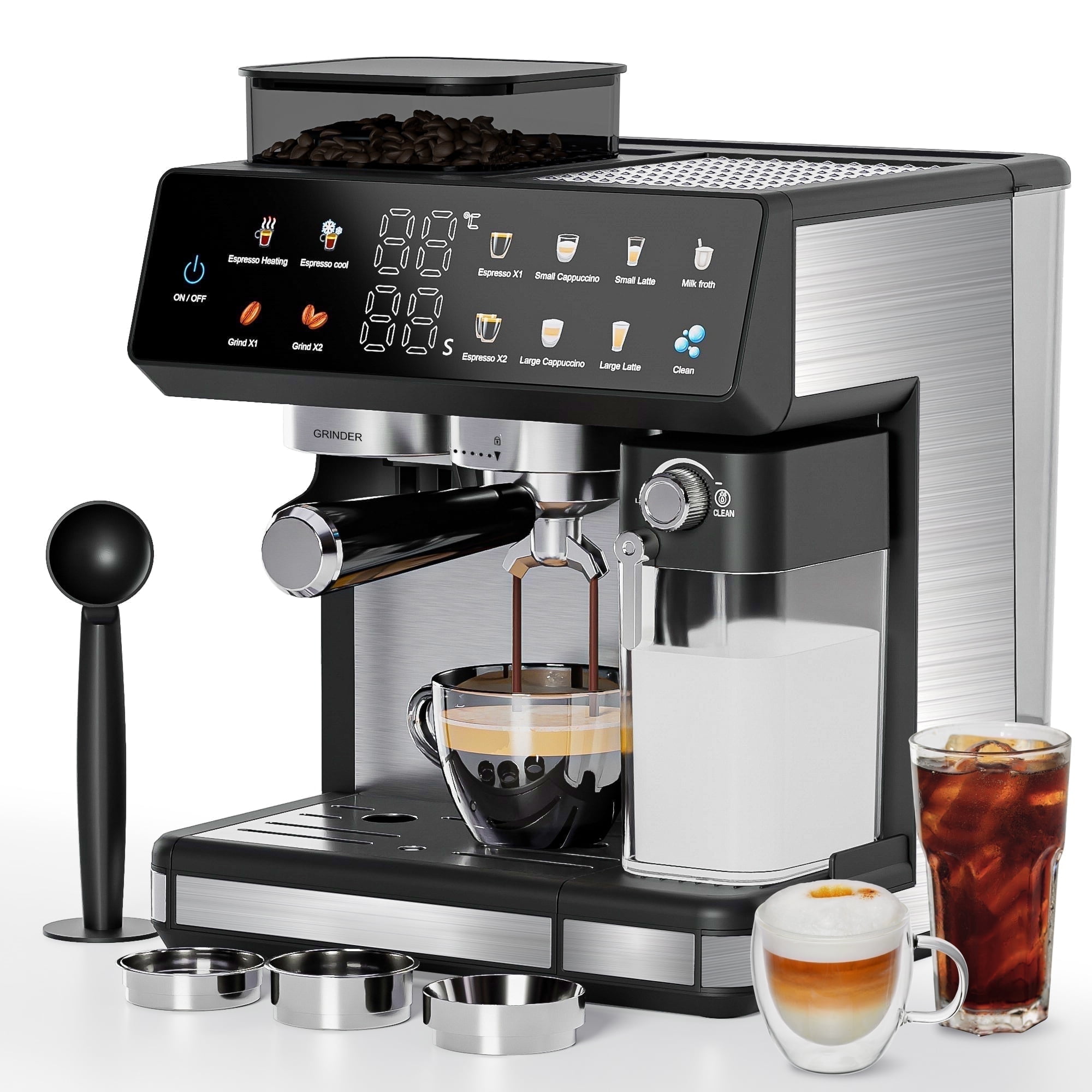
How to Make a Cappuccino With an Espresso Machine
Follow this order: prepare the espresso, steam the milk, and combine them while both are hot. The full process usually takes only a few minutes once your setup is ready.
1. Preheat the machine and cup
Turn on the espresso machine and allow it to reach its normal brewing temperature. If your machine has a separate steam boiler or heat-up cycle, follow the manual.
Warm the cup with hot water, then empty it. A warm cup helps the drink stay hot. It also gives you time to prepare the milk without the espresso cooling too fast.
Make sure the portafilter, basket, group head, and steam wand are clean. Old coffee oils can make espresso taste bitter, while dried milk can block the steam wand.
2. Grind and measure the coffee
for a double shot, start with the dose listed for your portafilter basket. Many home double baskets hold about 16–18 grams of coffee, but basket sizes differ.
Grind the coffee just before brewing. The grounds should be fine and similar in texture to table salt, though the exact setting depends on the coffee and grinder.
Place the portafilter on a scale and add the dose. Distribute the grounds evenly. A level coffee bed helps water pass through the coffee at a steady rate.
3. Tamp the coffee evenly
Use the tamper to press the grounds into a flat puck. Keep the tamper level. You do not need to use extreme force; a firm, even tamp is more useful than trying to press as hard as possible.
Brush loose grounds from the rim of the basket and lock the portafilter into the group head. Loose grounds can affect the seal and make cleanup harder.
4. Pull the espresso shot
Place the warmed cup under the portafilter and start the brew cycle. For a starting point, aim for about 36 grams of liquid espresso from 18 grams of coffee. This is a 1:2 brew ratio.
A shot may take about 25–35 seconds, but time alone does not determine quality. Taste matters more. The espresso should have a balanced flavor, with some sweetness and pleasant bitterness rather than a sharp, sour, or burnt taste.
If the shot runs very quickly and tastes thin or sour, use a finer grind. If it drips very slowly and tastes harsh or dry, use a slightly coarser grind. Change only one variable at a time.
5. Add cold milk to the pitcher
Pour cold milk into the pitcher. Cold milk gives you more time to add air and control the texture.
For one double-shot cappuccino, start with about 4 ounces of milk. You may need more or less based on the cup size and the amount of foam you want.
6. Purge the steam wand
Briefly open the steam valve before placing the wand in the milk. This clears water that may have collected inside the wand.
Keep your hand away from the steam outlet. Steam can cause serious burns. Never touch the metal tip during or right after steaming.
7. Steam the milk
Place the steam wand tip just below the surface of the milk. Open the steam valve fully if your machine allows it.
You should hear a soft paper-tearing or light hissing sound. This adds air to the milk. If the wand screams loudly, the tip may be too high. If it makes no sound, it may be too deep.
Once the milk has gained a small amount of volume, lower the pitcher slightly so the wand sits deeper. Angle the pitcher to create a smooth whirlpool. This mixes the air into the milk and breaks large bubbles into fine foam.
Stop steaming when the pitcher feels hot but can still be held for a few seconds. For a practical home target, milk around 140–150°F usually feels hot and remains sweet. Avoid boiling the milk, which can give it a cooked taste and weaken its texture.
8. Tap and swirl the milk
Close the steam valve before removing the wand from the milk. Wipe the wand at once with a clean, damp cloth, then purge it again briefly.
Tap the pitcher gently on the counter to remove large bubbles. Swirl the milk until it looks smooth, shiny, and similar to wet paint.
If the milk looks dry, stiff, or filled with large bubbles, it contains too much air. You can still use it, but the next pitcher should start with less time at the surface.
9. Pour the cappuccino
Swirl the espresso if the crema has separated. Hold the pitcher close to the cup and pour the milk into the center.
Start with a thin stream to mix milk with the espresso. As the cup fills, raise the pitcher slightly for a moment, then lower it again to place foam on top.
Stop when the cup is full and the surface looks glossy. A good cappuccino has integrated milk, not a separate layer of hot milk under a large spoonful of dry foam.
Serve it right away. Espresso and milk lose heat and texture as they sit.

How to Tell if Your Cappuccino Is Good
A well-made cappuccino should have a warm, balanced flavor and smooth texture. The coffee should not disappear under the milk.
Look for these signs:
- The espresso tastes clear, not watery or burnt.
- The milk feels smooth rather than bubbly.
- The foam has small, even bubbles.
- The drink is hot but not scalding.
- The milk and espresso blend together instead of forming hard layers.
- The foam stays on top without looking dry or stiff.
Taste the drink before adding sugar. Sweetness, acidity, bitterness, and milk texture can help you identify what to change next time.
If the espresso tastes sour
Sour espresso often means the coffee was under-extracted. Possible causes include:
- The grind is too coarse.
- The shot ran too quickly.
- The coffee dose is too low.
- The water did not contact the coffee evenly.
- The beans are very light roasted and need a different recipe.
Try a slightly finer grind first. Keep the dose and yield the same so you can judge the change.
If the espresso tastes bitter or burnt
Bitter espresso may be over-extracted or overheated. Try:
- A slightly coarser grind
- A shorter brew yield
- A lower brewing temperature, if your machine allows adjustment
- Fresher coffee
- A clean group head and portafilter
Dark-roasted coffee can taste more bitter even when the extraction is reasonable. Milk softens bitterness, but it cannot hide badly burned coffee.
If the milk has large bubbles
The wand tip was likely too high for too long. Add less air during the first few seconds, then lower the wand to create a whirlpool.
Do not try to stir large bubbles away with a spoon. Good milk texture comes from adding and mixing air during steaming.
If the milk is flat
Flat milk may not have received enough air. Keep the wand tip just below the surface at the start and listen for a quiet hiss.
The wand must also produce enough steam. If steaming takes too long, check the machine manual and make sure the steam tip is not blocked.

Cappuccino Troubleshooting Table
Use the symptom, likely cause, and first adjustment below. Make one change at a time.
| Symptom | Likely cause | First adjustment |
|---|---|---|
| Shot runs in less than about 20 seconds | Grind too coarse or dose too low | Grind finer or check the dose |
| Shot barely drips | Grind too fine or puck too tightly packed | Grind coarser |
| Espresso tastes sour | Under-extraction | Grind finer or extend the shot slightly |
| Espresso tastes dry and bitter | Over-extraction | Grind coarser or shorten the shot |
| Milk has stiff peaks | Too much air | Keep the wand tip lower sooner |
| Milk has no foam | Wand tip too deep | Keep the tip near the surface at the start |
| Foam has large bubbles | Poor air mixing | Create a stronger whirlpool |
| Milk tastes cooked | Milk was overheated | Stop steaming sooner |
| Drink cools quickly | Cold cup or delayed pouring | Warm the cup and pour at once |
| Coffee tastes stale | Old beans or poor storage | Use fresher beans and seal them well |
Clean the machine before changing many settings. Coffee residue and dried milk can create problems that look like grind or technique issues.

Common Mistakes to Avoid
The most common mistake is trying to fix every problem at once. Espresso depends on several variables, including grind size, dose, yield, water temperature, pressure, and coffee freshness. Change one variable, taste the result, and record what happened.
Avoid these errors:
- Using warm or room-temperature milk
- Filling the pitcher too high
- Leaving the steam wand dirty
- Making very dry foam with large bubbles
- Tamping at an angle
- Changing the grind, dose, and shot time together
- Letting espresso sit while you steam milk
- Boiling the milk
- Using a cup that is too large for the amount of espresso
- Assuming a timer can replace tasting
A cappuccino is not improved by adding more foam. Too much dry foam can cover the coffee and make the drink feel light and chalky. Aim for fine foam that pours and blends.
Food safety and machine safety
Keep milk refrigerated until you are ready to use it. The U.S. Department of Agriculture advises keeping perishable food out of the temperature danger zone, which is 40°F to 140°F, and limiting room-temperature exposure to two hours, or one hour when the surrounding temperature is above 90°F.
Use a clean pitcher and do not pour leftover steamed milk back into the carton. Discard milk that has been sitting out too long.
Steam can burn skin quickly. Keep your hands away from the wand tip, release steam carefully, and follow the machine maker’s instructions. If the wand becomes blocked, turn off the machine and let it cool before cleaning it.

How Much Coffee and Milk Should You Use?
The best amount depends on your basket, cup, roast, and personal taste. Use the table below as a starting guide rather than a strict rule.
| Drink size | Espresso | Milk before steaming | Best for |
|---|---|---|---|
| Small cappuccino | 1 shot, about 1 ounce | 2–3 ounces | Strong coffee flavor |
| Standard home cappuccino | 2 shots, about 2 ounces | 4 ounces | Balanced milk and coffee |
| Larger milk drink | 2 shots, about 2 ounces | 5–6 ounces | Milder flavor |
If the drink tastes too weak, use less milk or more espresso. If it tastes too strong, add a little more milk. Do not keep adding foam to correct a weak shot; foam changes texture more than coffee strength.
A kitchen scale helps because volume can be misleading. Foam takes up more space than liquid milk, so weighing the coffee and espresso gives you better repeatability.

Can You Make a Cappuccino Without a Steam Wand?
Yes. You can brew espresso and froth milk with an automatic frother, handheld frother, French press, or tightly sealed jar. These methods can make foam, but they do not always create the same smooth texture as a steam wand.
For a handheld frother, warm the milk first, then add air near the surface. For a French press, pump the plunger through warm milk until it expands, then tap and swirl the vessel.
Do not shake hot milk in a sealed jar. Steam pressure can build and cause burns. If you use a jar, leave the milk cold while adding air, then warm it in an open, heat-safe container.
Automatic frothers are convenient and consistent, but they may give you less control over foam thickness. A steam wand is usually better when you want to practice café-style texture and pouring.

How to Clean the Espresso Machine After Making a Cappuccino
Clean the steam wand immediately after every use. Wipe the outside with a damp cloth, then purge steam for a few seconds. This helps remove milk from the wand opening.
Knock out the coffee puck and rinse the portafilter and basket. Run a short burst of water through the group head to remove loose grounds.
At the end of the day, follow the machine manual for backflushing, water-tank care, and removable-part cleaning. Descale the machine only as often as the manufacturer and local water conditions require. Some machines use filters or have specific descaling products.
Never use a sharp object to force debris into a blocked steam hole unless the manual allows it. A damaged steam tip can change steam flow and affect both safety and milk texture.

Key Takeaways
- Use fresh espresso coffee and cold milk.
- Start with one or two espresso shots.
- Grind fine enough for espresso, then adjust by taste.
- Steam milk into glossy, fine foam rather than large bubbles.
- Stop before the milk boils.
- Pour the milk while the espresso is fresh.
- Clean and purge the steam wand after every use.
- Change one brewing variable at a time when troubleshooting.
Frequently Asked Questions
What milk is best for a cappuccino?
Whole milk is the easiest choice for rich, smooth foam. Two-percent milk also works well and feels lighter. Nonfat milk creates more foam but may taste less creamy. For plant-based options, choose a barista-style oat, soy, or almond milk made for steaming.
How hot should milk be for a cappuccino?
Aim for milk that feels hot but not scalding. A practical target is about 140–150°F. If you do not use a thermometer, stop when the pitcher is too hot to hold comfortably for more than a few seconds. Do not boil the milk.
Should a cappuccino have more foam than a latte?
Usually, yes. A cappuccino has a higher proportion of foam, while a latte contains more steamed milk and a thinner foam layer. The exact difference varies by café and cup size.
Can I use pre-ground coffee?
Yes. Pre-ground espresso coffee can work, but it gives you less control because you cannot adjust the grind for your machine. Keep it sealed, use it while fresh, and measure the dose if possible.
Why does my cappuccino taste weak?
The drink may contain too much milk, too little espresso, or a shot that extracted poorly. Start by reducing the milk slightly or checking the espresso yield. If the coffee runs quickly and tastes thin, grind finer.
How often should I descale an espresso machine?
Follow the machine manufacturer’s schedule. Descaling needs vary with the machine and the mineral content of your water. Clean the steam wand after every use, but do not confuse daily cleaning with descaling.
Final Recommendation
Start with a double shot made from about 18 grams of coffee and roughly 36 grams of espresso. Steam about 4 ounces of cold milk until it is glossy and warm, then pour it into the espresso at once.
Your first cappuccino may not be perfect. Adjust the grind for espresso flavor, adjust the steam-wand depth for milk texture, and practice pouring with small changes. With clean equipment and a few careful repetitions, you can make a balanced cappuccino at home without complicated gear.