
To clean a stainless steel outdoor grill, let it cool, then wash the steel with warm water and a little dish soap. Use a soft cloth, wipe in the direction of the grain, rinse with clean water, and dry it well. Use a separate method for the grates, burners, and grease tray, and check your grill’s manual before using any special cleaner.
If you’re cleaning a grill on a U.S. patio or in a backyard, it’s easy to focus on the cooked-on food and overlook the steel around it. The good news: regular, gentle care can remove grease and fingerprints without scratching the finish. A few safety checks first can also help prevent burns or damage.

Gather supplies and make the grill safe
Before you clean, turn the grill off and let it cool completely. For a gas grill, turn off the burners and shut off the gas supply; for an electric grill, unplug it. If you’re unsure how to shut off your model, follow its owner’s manual.
Gather:
- Warm water and mild dish soap
- Two soft microfiber cloths
- A soft, non-scratch sponge or nylon brush
- A small bucket
- Gloves, if you want to keep grease off your hands
Check the manual for care instructions, especially if you don’t know whether a panel is bare stainless steel, coated steel, or another finish. Grill designs vary, so the manual is the best guide for parts such as burners, igniters, and grease systems. Manufacturer support libraries, including Weber’s support center and Napoleon’s support center, can help you find model-specific instructions.
Keep cleaning products away from children and pets, and follow the label. Don’t mix cleaners. In particular, never combine bleach with ammonia or other cleaning products.

How to clean the stainless steel exterior
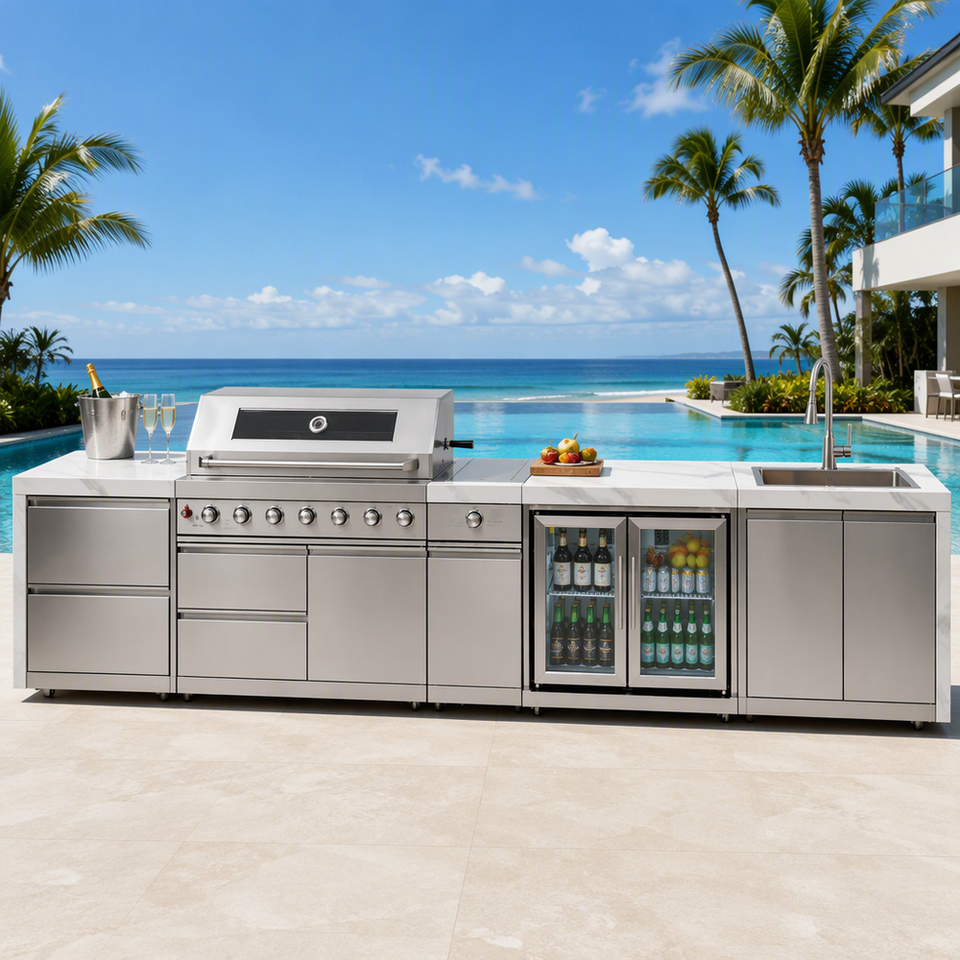
For routine cleaning, use mild dish soap, warm water, and a soft cloth. Wipe with the grain—the faint lines that run in one direction across brushed steel—rather than in circles. This helps clean the surface while reducing the chance of visible scratches.
- Remove loose dust and crumbs with a dry, soft cloth.
- Add a small amount of dish soap to warm water.
- Dip a microfiber cloth in the soapy water and wring it out.
- Wipe the steel with the grain. Use light pressure.
- Wipe again with a clean cloth dampened with plain water to remove soap.
- Dry the surface with a fresh, soft cloth.
Drying matters. It helps prevent water spots, especially if your tap water leaves mineral marks. If grease remains, repeat the wash rather than reaching for a harsh pad or abrasive cleaner.
For a product labeled for stainless steel, read the label and test it on a small, hidden spot first. Keep it off food-contact surfaces unless the label says it is suitable for them, and rinse as directed.
Clean the grates, burners, and grease tray separately
The stainless steel body is only one part of the cleaning job. Grates, burners, and grease trays can be made from different materials, so don’t assume the same cleaner or tool is right for every part. Use the instructions in your grill manual for model-specific steps.
Cooking grates
Once the grill is cool, remove the grates if the manual allows it. Wash them with warm, soapy water and a non-scratch sponge or nylon brush, then rinse and dry them before putting them back.
Check the grate material first. Stainless steel grates and porcelain-coated grates need gentle handling; abrasive tools may scratch or chip a coating. If you use a metal brush on a grate, check the brush for loose or damaged bristles and inspect the grate before cooking. A scraper made for grill grates can be another option.
Burners and igniters
Follow the manual before removing or cleaning burner parts. Clear debris gently, and don’t force a wire or tool into burner openings; changing the openings can affect how the burner works. Keep water and cleaner away from igniters and other parts the manual says not to wet.
Grease tray and catch pan
Let grease cool before you handle the tray. Empty it into the trash according to local disposal rules, then wash the removable tray with warm, soapy water if the manual permits. Put it back only when it is dry and seated as directed.

Remove fingerprints, grease, and water spots
Start with the least harsh method that works: warm water, mild dish soap, and a soft cloth. A second gentle wash is usually a better next step than scrubbing harder.
| What you see | What to try |
|---|---|
| Fingerprints or light grime | Wipe with a damp microfiber cloth and dry with a clean cloth. |
| Greasy film | Wash with warm, soapy water, then rinse and dry. Repeat if needed. |
| Water spots | Wipe with clean water and dry fully. If marks remain, use a stainless steel cleaner only as its label directs. |
| Stuck-on residue | Hold a warm, damp cloth on the spot briefly, then wipe gently with the grain. |
If a mark does not come off, pause before using a stronger product. It may be a scratch, heat discoloration, or a mark in a coating rather than dirt. A product meant for bare stainless steel may not be suitable for a coated or painted panel.
Avoid these common cleaning mistakes
The wrong tool can leave scratches or damage that routine cleaning cannot fix. Avoid steel wool, abrasive scouring pads, and harsh powders on stainless steel. They can scratch the finish; steel wool may also leave particles that rust.
Do not use bleach or cleaners that contain chlorine on stainless steel. Avoid leaving salty or acidic residue on the surface, and don’t use oven cleaner unless your grill manual says it is safe for that specific part. Never spray cleaner or water onto a hot grill.
Also avoid cleaning against the grain or using a pressure washer. High-pressure water can force moisture into areas that are hard to dry, while a rough scrub can make marks more visible. When in doubt, use a soft cloth and the care instructions for your grill’s exact model.

Keep the grill clean between deep cleans
Wipe the exterior when you notice grease or fingerprints, rather than waiting for a thick film to build up. After cooking, follow your manual’s directions for cleaning the grates and handling grease. Let the grill cool before washing exterior panels or removing parts.
If the grill stays outside, use a cover made for it when it is cool and dry. A cover can limit exposure to rain and debris, but it does not replace cleaning. Check the grill now and then for trapped moisture, standing water, or grease buildup.

Frequently asked questions
Can I use vinegar to clean a stainless steel grill?
A mild soap-and-water wash is the simplest choice for routine care. Vinegar is acidic, and the effect can depend on the steel finish and how long it sits. Check the manual before using it, and don’t leave acidic liquid on the surface.
Can I clean the grill while it is still warm?
Wait until the grill is fully cool before washing stainless steel panels or handling removable parts. Follow the manual for any post-cooking grate-cleaning steps. Never put water or cleaner on hot components.
Why does my stainless steel grill look rusty?
A brown mark may be residue, a surface stain, or corrosion; its appearance alone may not tell you which. Clean it gently with soap and water, then dry the area. If the mark remains, check the manual or contact the manufacturer before trying an abrasive product.
How often should I clean the stainless steel exterior?
Clean it when grease, dust, or fingerprints appear. How often that is depends on how much you use the grill and how exposed it is to weather. Regular light cleaning is easier on the finish than waiting until grime builds up.
Is stainless steel cleaner safe to use on grill grates?
Not necessarily. A cleaner made for the exterior may not be suitable for a cooking surface. Use a product on grates only if its label and your grill manual allow it, and follow any rinse instructions.
Conclusion
For most stainless steel outdoor grills, warm water, mild dish soap, a soft cloth, and a wipe with the grain are enough to clean the exterior. Dry the steel after rinsing, and treat grates, burners, and grease parts according to the grill’s manual. If a stain resists gentle cleaning, identify the surface and part before trying a stronger method.